Global
 English
 中文简体
 русский
 Español

News Directory
An 8,000 rpm servomotor spindle is not a niche requirement anymore, yet most planetary gearbox catalogues stop rating their units at 4,500 rpm input. Once you push a standard planetary stage past that line, bearing retainer life, lubricant shear, and tooth contact dynamics all shift into a different operating regime. This article defines the high-speed regime for planetary gearboxes, explains which performance requirements decide whether a unit will survive continuous duty, and gives engineers and procurement teams a verification framework that works in design reviews and supplier audits.
A planetary gearbox enters the high-speed regime when continuous input speed exceeds 4,500 rpm, bearing DN values pass roughly 200,000, or pitch-line velocity crosses 25 m/s. Below those thresholds, standard rating rules hold. Above them, centrifugal loading on planet carrier bearings, oil churning losses, and tooth mesh frequency begin to govern every major dimensioning decision.
Speed capability is never a single number. A unit rated for 8,000 rpm input at a 5:1 ratio may be limited to 5,000 rpm at a 12:1 ratio, because the planet gears spin faster relative to the carrier when the ring gear is fixed. A high-speed specification should always state input speed, stage count, and ratio together.
The practical definition of a high-speed planetary gearbox is a planetary reduction unit engineered for continuous input speeds above 4,500 rpm, with thermal stability, balance quality, and lubrication validated at that speed rather than merely rated from catalogue torque tables.
Six interlocking performance requirements determine whether a planetary gearbox survives continuous high-speed operation: input speed capacity, thermal stability, efficiency, backlash control, vibration behaviour, and torsional rigidity. Missing any one of them creates a failure point that appears only after the unit enters service.
In a high-speed planetary gearbox, design choices matter more than catalogue torque figures, because bearings, gear geometry, and lubrication are all speed-limited. The comparison below summarises the practical differences between a standard reducer and a unit engineered for continuous high-speed input.
Stamped steel bearing cages, spur ground teeth without profile modification, splash lubrication, ISO 1940 G6.3 balance quality, and lip-type output seals. These units perform well below 3,000 rpm, where centrifugal effects and heat remain manageable.
Machined cages, profile-modified or helical ground teeth, forced oil circulation with an external cooler, G2.5 balance quality, and labyrinth non-contact seals. Every component is sized for a continuous speed target rather than a transient peak.
| Design parameter | Standard planetary gearbox | High-speed planetary gearbox |
| Continuous input speed | up to 3,000 rpm | 4,500 to 12,000 rpm |
| Planet bearing cage | stamped steel | machined, centrifugal stable |
| Tooth flank | ground, standard profile | profile-modified, helical optional |
| Lubrication | grease or splash | forced oil with cooler |
| Balance quality | ISO 1940 G6.3 | ISO 1940 G2.5 or better |
| Output sealing | lip-type seal | labyrinth or non-contact |
| Backlash class | 0.2 to 0.5 deg | 0.03 to 0.08 deg |
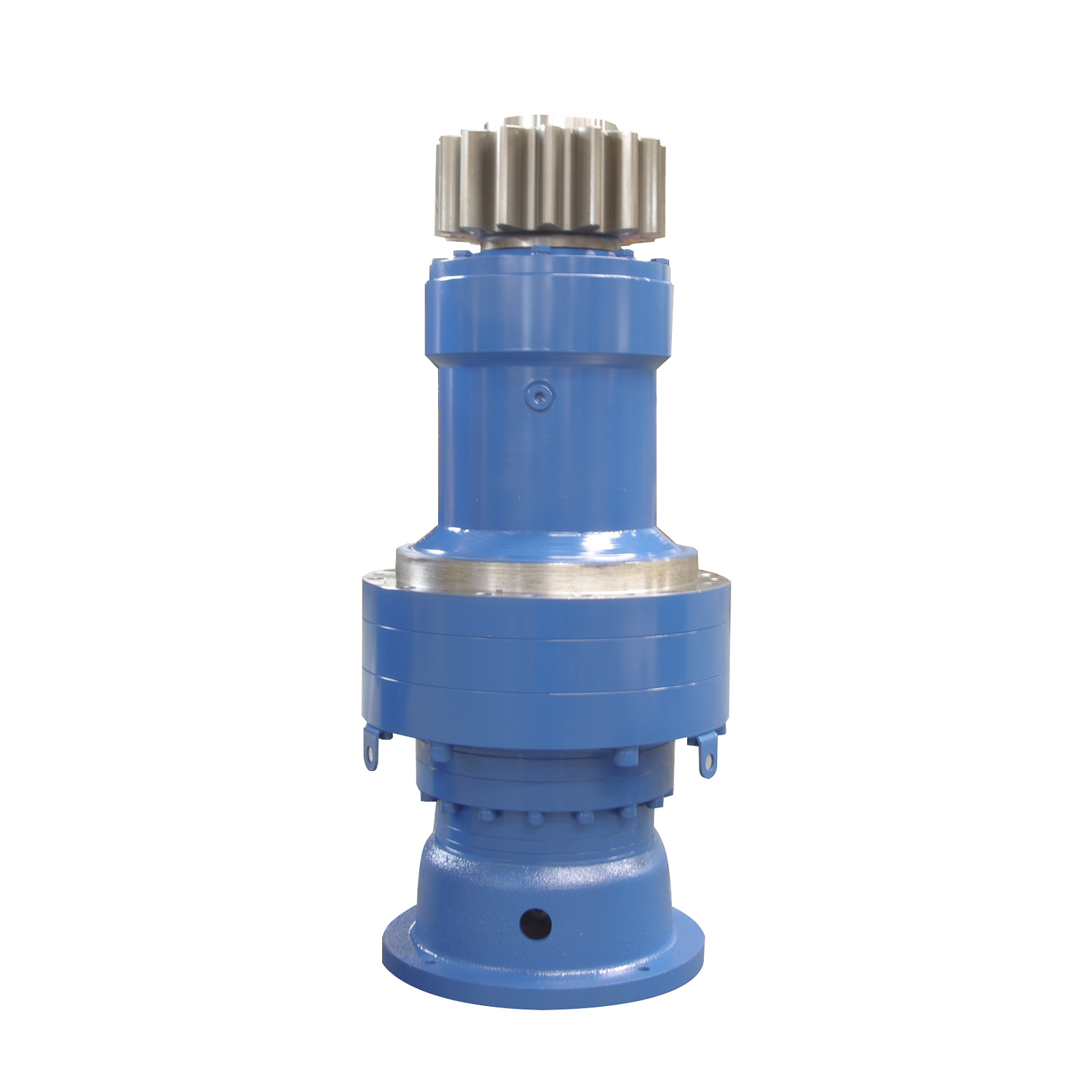
 High Torque Coaxial Base-Mounted Planetary GearboxThis N Series unit handles continuous high-speed operation with forced oil cooling and balanced components. Its validation includes thermal stability and vibration testing, making it suited for demanding industrial drives.View Product →
Validation, not calculation, is what proves a high-speed planetary gearbox. A five-phase acceptance procedure covers run-in, thermal stability, endurance, performance mapping, and vibration measurement; skipping any phase leaves a gap that surfaces only after installation.
Ramp input speed through 50 percent, then 80 percent, then 100 percent of the rated value, holding each step long enough to seat tooth contacts and bed-in bearings.
Run at maximum continuous speed and torque until the oil sump temperature stabilises. Record the delta above ambient and compare it with the design limit.
Operate for at least 100 hours at the rated continuous point, then inspect tooth contact patterns, bearing condition, and seal wear.
Measure efficiency across a speed-torque grid to confirm the declared rating curve and identify any efficiency collapse near the upper speed limit.
Measure the vibration signature at full speed, confirm the balance grade, and re-check backlash after the endurance run to prove stability.
Define the duty cycle in three numbers when you source a high-speed planetary gearbox: continuous speed, peak speed, and the duration of each phase. Most specification failures come from giving the supplier only a nominal speed and no thermal context.
Sourcing decisions for planetary gearboxes depend heavily on torque density and L10 life, a relationship covered in detail in this planetary gearbox sourcing analysis. When you compare manufacturer offers, check the speed rating assumptions first; a unit that carries the same torque rating as a competitor but lists a lower continuous input speed is not the same product.
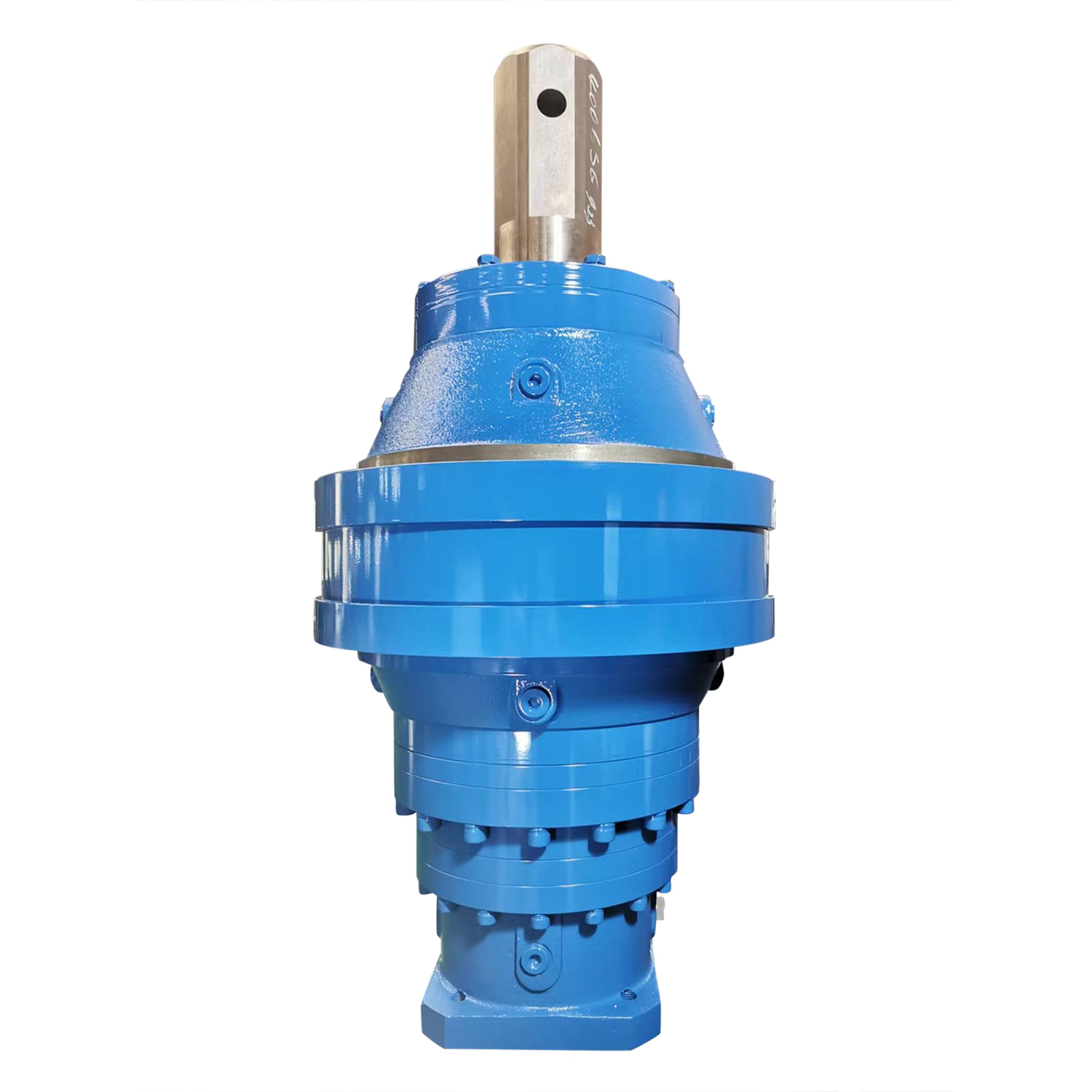
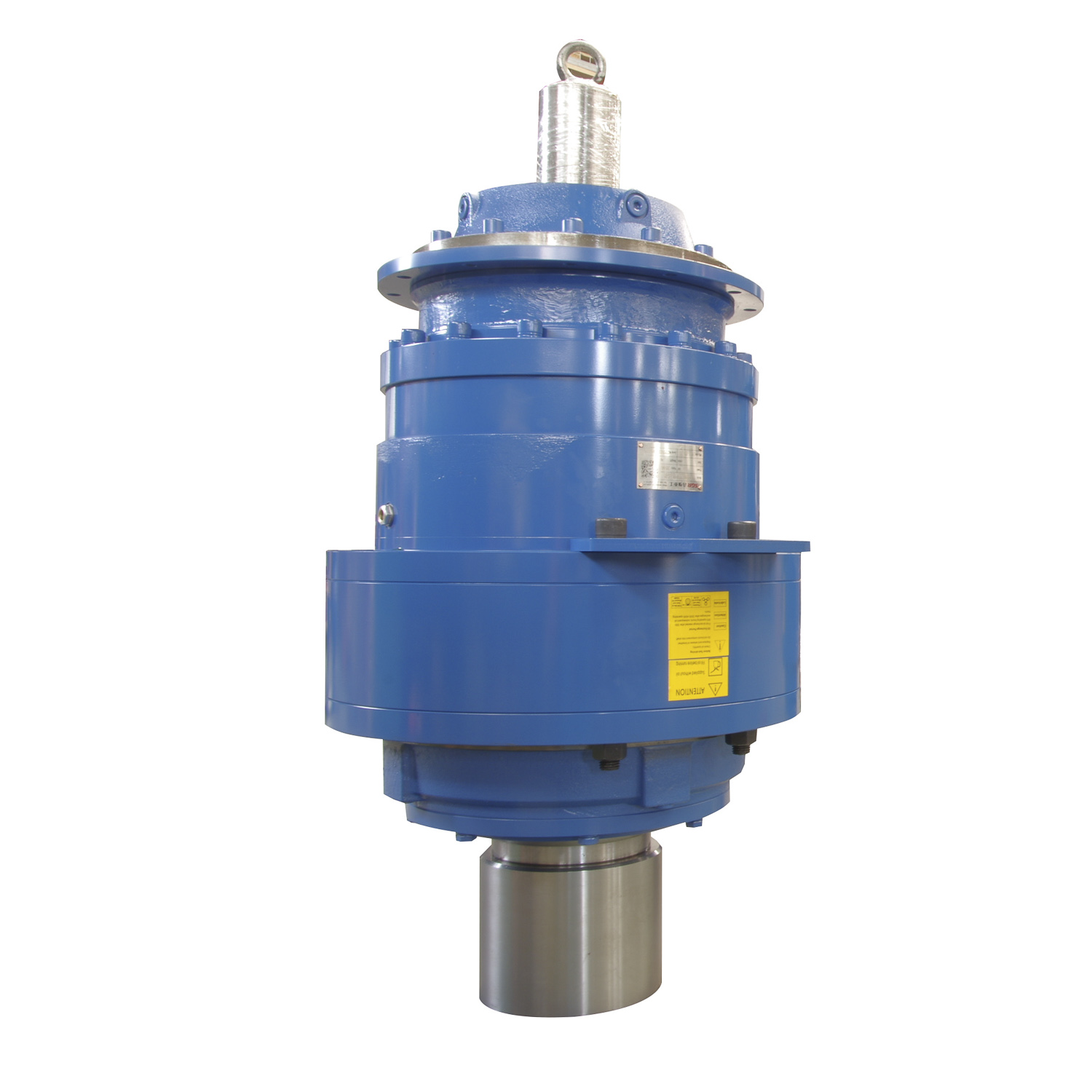 High Torque Planetary Gear Reducer for Heavy-Duty UseOffering ratios from 3.15 to 9000 and torque up to 800,000 N·m, this reducer suits continuous heavy loads. Its sealed casing and precision-ground gears support reliability in dusty, high-vibration environments.View Product →
High-speed planetary gearboxes appear wherever a compact reduction stage must follow an electric motor or servo at continuous speed. The strongest application clusters are machine tool spindle drives, dynamometer and endurance test benches, electric and hybrid traction drives, and turbomachinery auxiliaries or generators.
Shanghai SGR Heavy Industry Machinery Co., Ltd. (SGR), a Shanghai-headquartered gear transmission manufacturer with more than a decade of planetary and worm gearbox engineering, builds high-torque planetary reducers for continuous industrial duty rather than intermittent laboratory use. The company's coaxial and right-angle planetary families emphasise compact torque density and documented power efficiency, which makes them useful reference points when you benchmark suppliers. Our earlier high-speed planetary gearbox overview goes deeper into the operating characteristics that separate SGR's planetary units from generic speed reducers.
Commercial high-speed planetary gearboxes are normally specified for 4,500 to 12,000 rpm continuous input. Custom aerospace and turbomachinery units can go higher, but their lubrication, bearing, and balance requirements become significantly more demanding above 12,000 rpm.
Lubricant churning and windage losses grow with the square of pitch-line velocity, and tooth mesh losses also increase with mesh frequency. A typical high-speed planetary stage loses 2 to 5 points of efficiency between 1,000 rpm and 12,000 rpm input, which is why efficiency claims should always state the test speed.
No. Spur teeth with controlled profile modification are adequate in many high-speed applications, and they are easier to source precisely. Helical teeth reduce mesh frequency excitation and noise, which becomes valuable above roughly 6,000 rpm or when a very quiet system is required.
Standard planetary reducers often run on grease or splash lubrication. High-speed units above roughly 6,000 rpm normally require forced oil circulation with a defined flow rate, a filter, and an external cooler to hold the oil sump temperature below the design maximum.
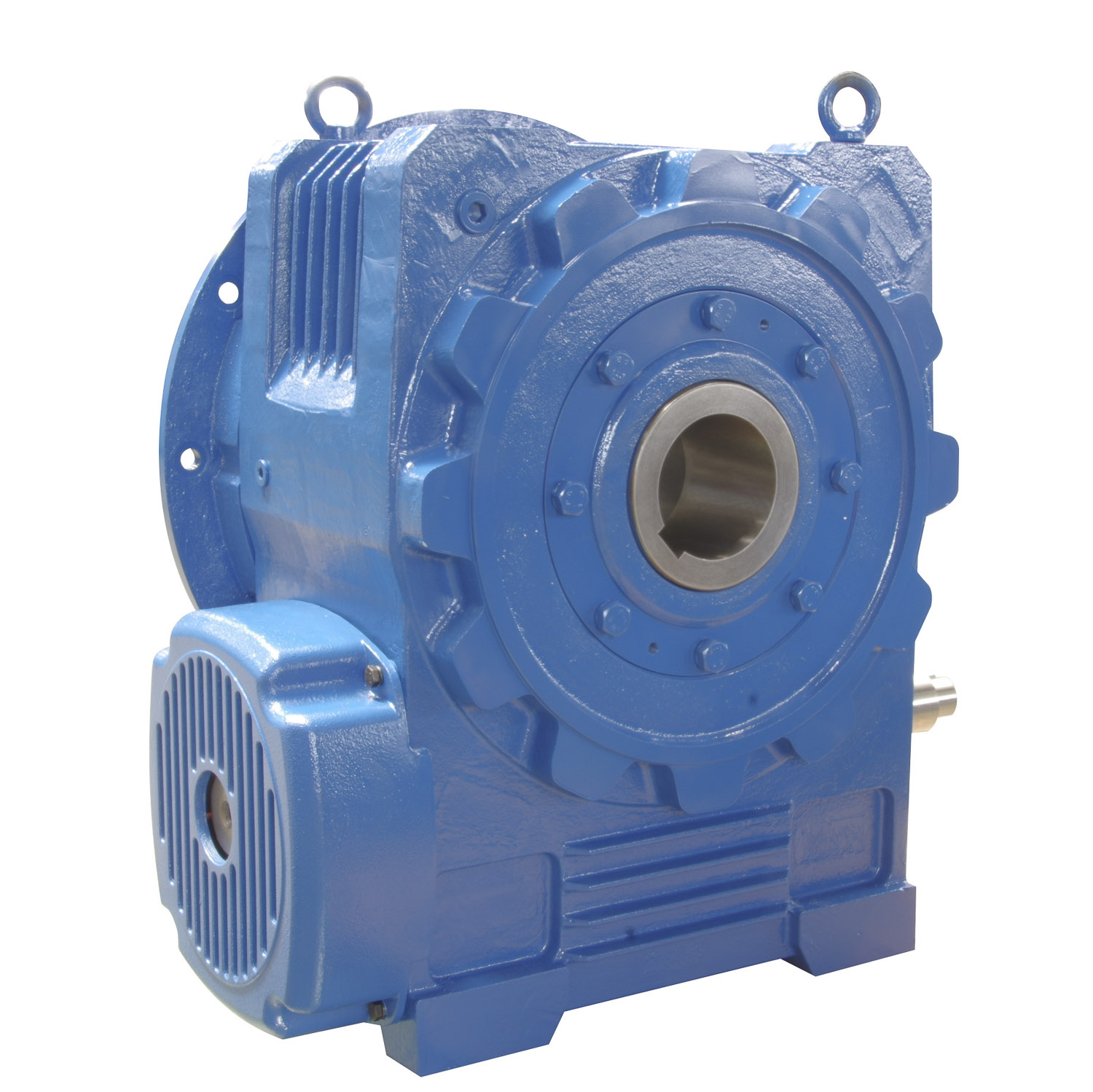
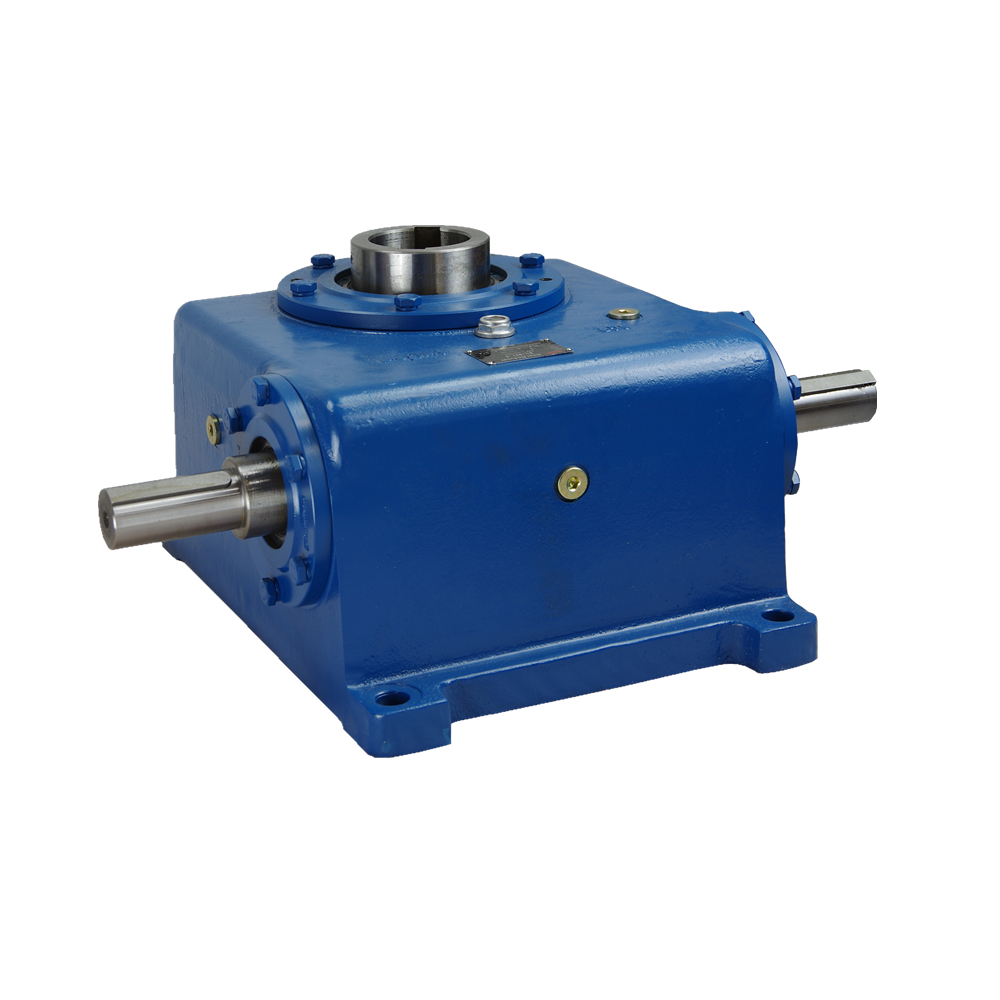
Product Description Series C double enveloping worm gearModel: 100 - 500Ratio: 10 -63Output Torque ...
See Details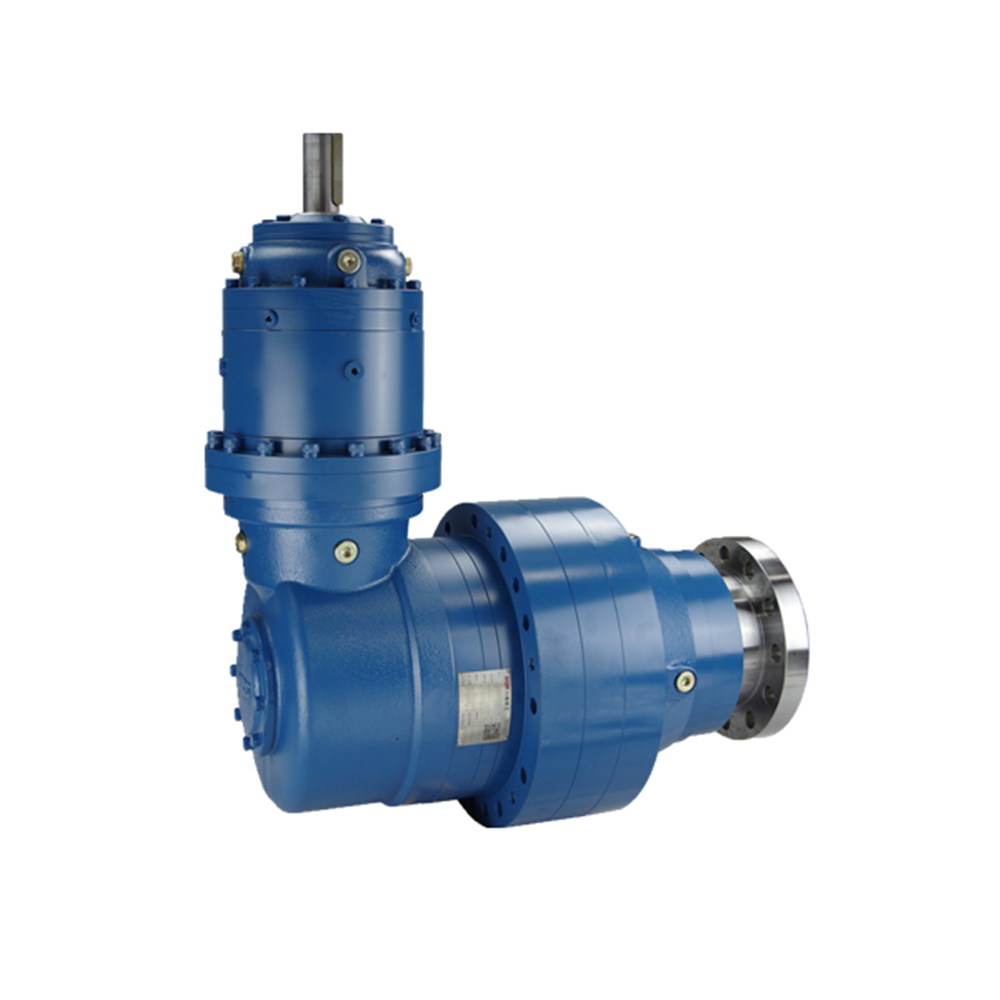
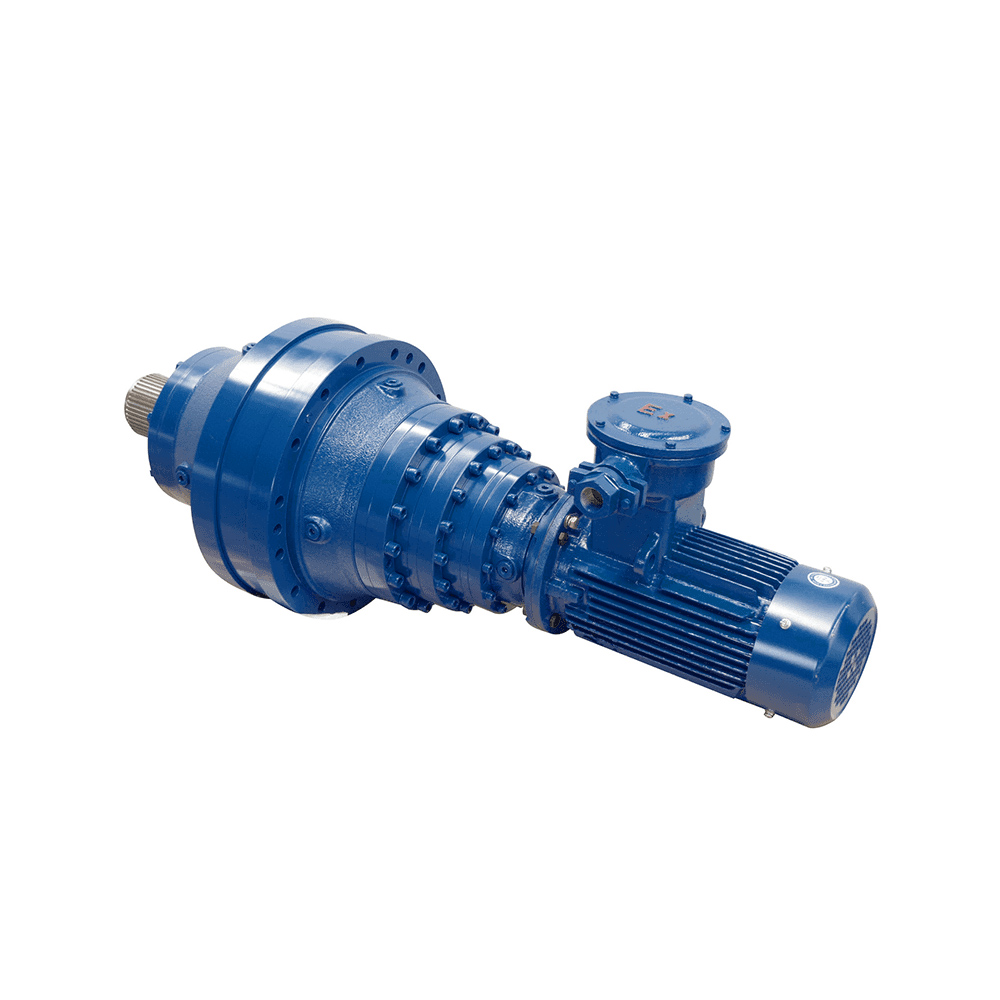
Technical data: 1. Ratio range: 3.15-30002. Input power: 0.25-55KW3. Permit torque rang: ≤ 200000N. ...
See Details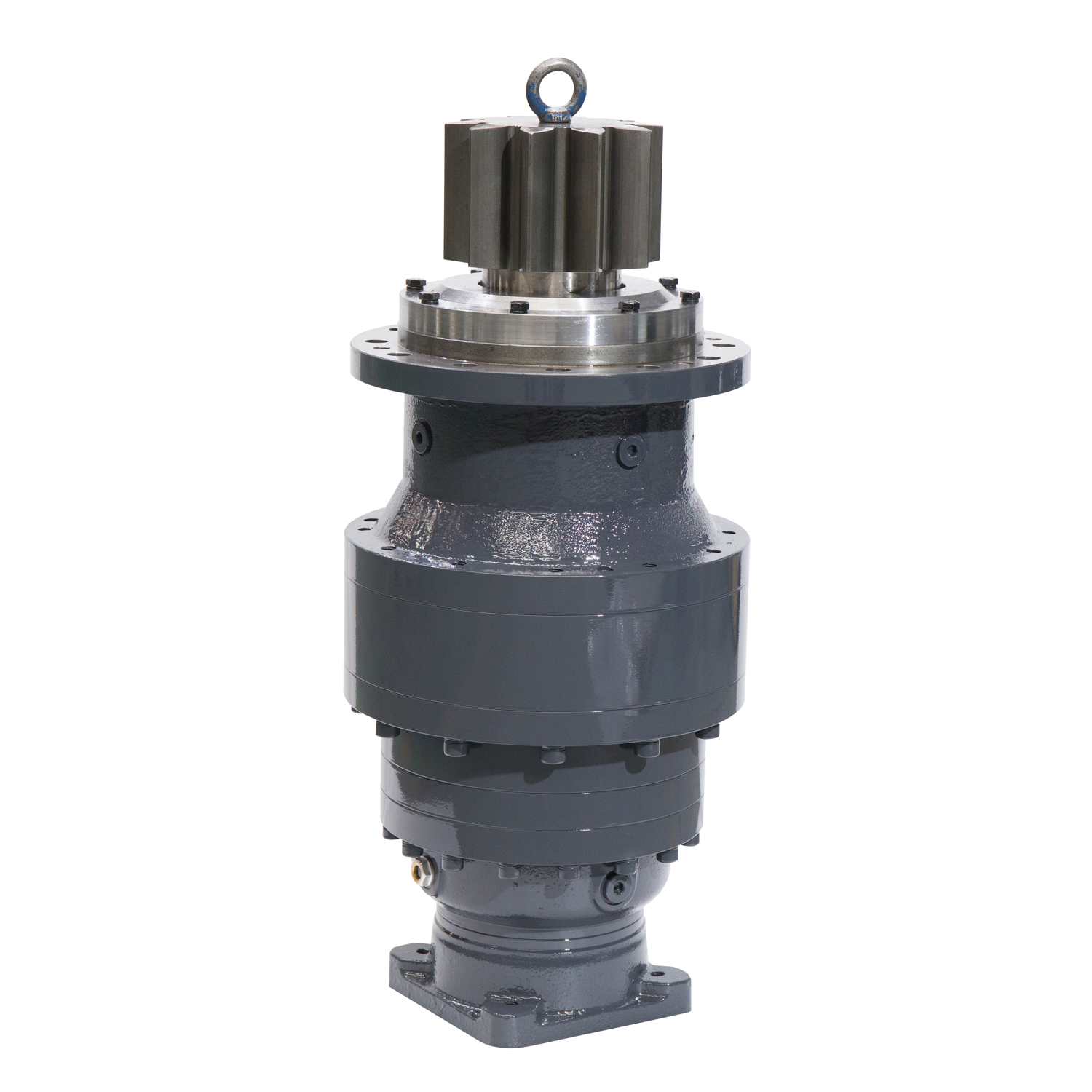
Model: 200-885Ratio: 3.15-7800Output Torque :1500Nm-540000NmRating Power :0.25KW-200kwDescription : ...
See Details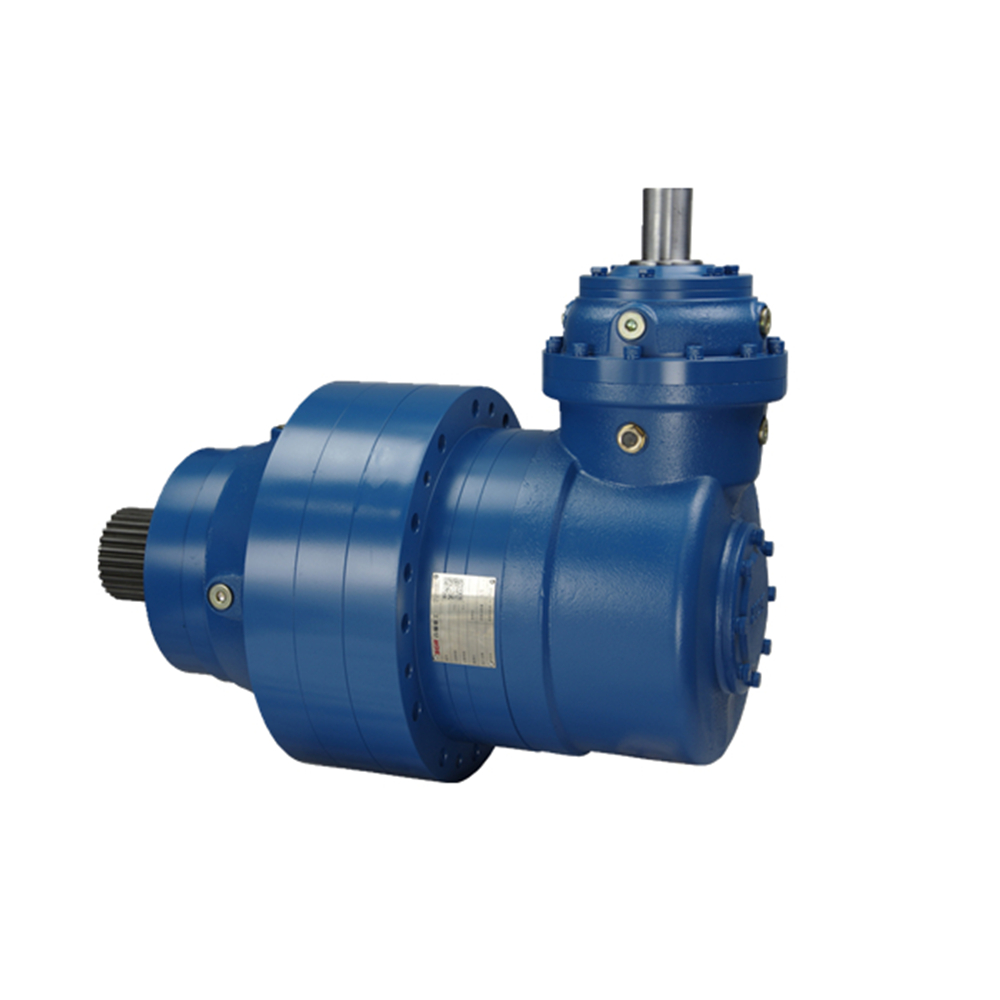
Technical data: 1. Ratio range: 3.15-30002. Input power: 0.25-55KW3. Permit torque rang: ≤ 200000N. ...
See Details
SGR is an ISO 9001 certified, DNV-accredited industry gearbox manufacturer since 1996. We supply different gear reducers to brands worldwide.