Global
  English
 中文简体
中文简体 русский
 Español
SGR develops and manufactures specialized worm gear reducers for logistics machinery attachments. T...
See Details
News Directory
A mixer manufacturer came to us after two standard-issue gear reducers failed on the same agitator within eighteen months. The catalog ratings looked correct, but the units had been selected on nominal power rather than on the torque spikes that occurred whenever the batch viscosity changed mid-cycle. After we rebuilt the drive around the real duty cycle, with a heavier housing, a larger service factor, and a non-standard hollow output bore, the same machine ran three shifts a day without a single failure.
That result is not unusual. Custom gearboxes exist for one reason: catalog products are designed around average conditions, while real machines operate at extremes of torque, duty cycle, mounting constraints, or environment. The industries that use custom gearboxes most intensively are mining and heavy industry, process equipment, material handling, and precision positioning, and in all of them the deciding factor is the cost of an unplanned stop.
A custom gearbox becomes the economical choice when the gap between the catalog rating and the actual requirement is wide enough that over-sizing would create fit, efficiency, or cost problems. The table below summarizes the selection drivers that normally trigger a custom design.
| Selection driver | Catalog standard | Custom design |
|---|---|---|
| Output torque / service factor | Based on nominal power rating | Matched to measured duty cycle and shock loads |
| Mounting and interfaces | Existing flange, shaft, and foot patterns | Drawn around the motor and driven equipment |
| Ratio and output speed | Fixed steps | Any ratio achievable within the gear geometry |
| Environment | Clean, moderate ambient assumed | Washdown, dust, high temperature, corrosive media |
| Precision | Standard backlash tolerance | Low backlash for indexing and positioning |
The decision is usually made by machine designers or plant engineers. An equipment manufacturer may need a specific motor flange and a compact footprint to fit inside a machine frame. A plant team may need to retrofit a drive into existing foundations without altering the surrounding structure. In both cases, the gearbox is defined by interface dimensions, torque, and service factor, which is exactly the information a custom design starts from.
Custom work also means choosing the right transmission architecture. Planetary gearboxes offer high efficiency and torque density in a compact coaxial package. Double-enveloping worm gearboxes provide high load capacity and a short right-angle arrangement. Combination reducers handle extreme ratios that no single stage can deliver. The designer's job is to select the geometry, not merely the next frame size up.
Mining and heavy industry are arguably the largest users of custom gearboxes. Crushers, conveyors, bucket wheels, and slewing drives impose sustained high torque, shock loads, and abrasive dust, often at the top of the catalog temperature range. A conveyor that stops under full load can require hours to restart, so reliability is weighted far more heavily than first cost.
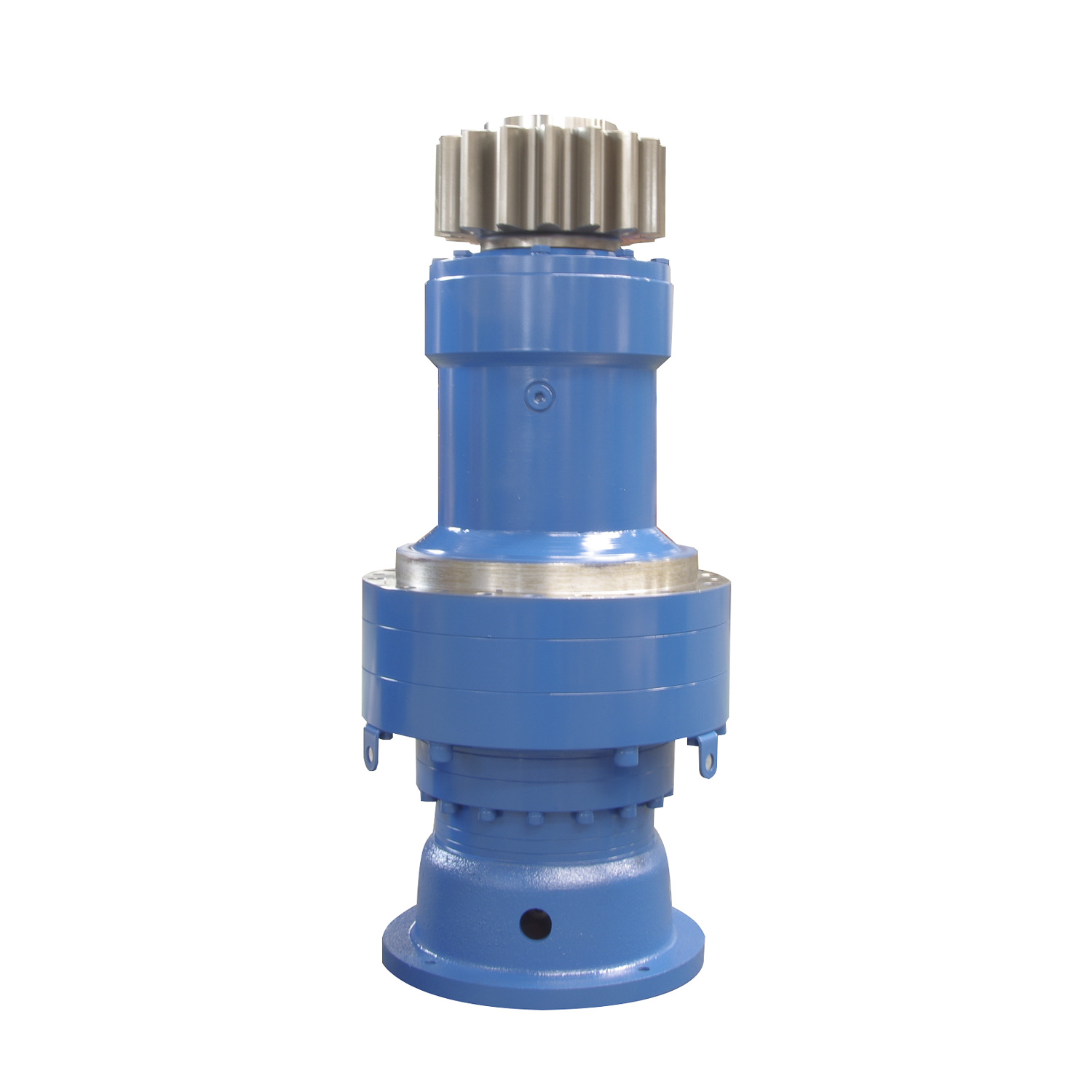
Typical application scenarios of planetary reducers in crusher service illustrate this point well: the reducer must absorb repeated impacts while maintaining alignment under heavy side loads. The same reasoning applies to slewing drives for excavators and cranes, where the gearbox is integrated into the rotating structure and must tolerate both radial and axial forces.
A common solution is a high-torque planetary gear reducer with a reinforced housing and a custom output shaft or spline. This gives the machine builder a compact footprint without sacrificing rated torque, and it allows the output interface to match the pinion or pulley directly instead of through an adapter.
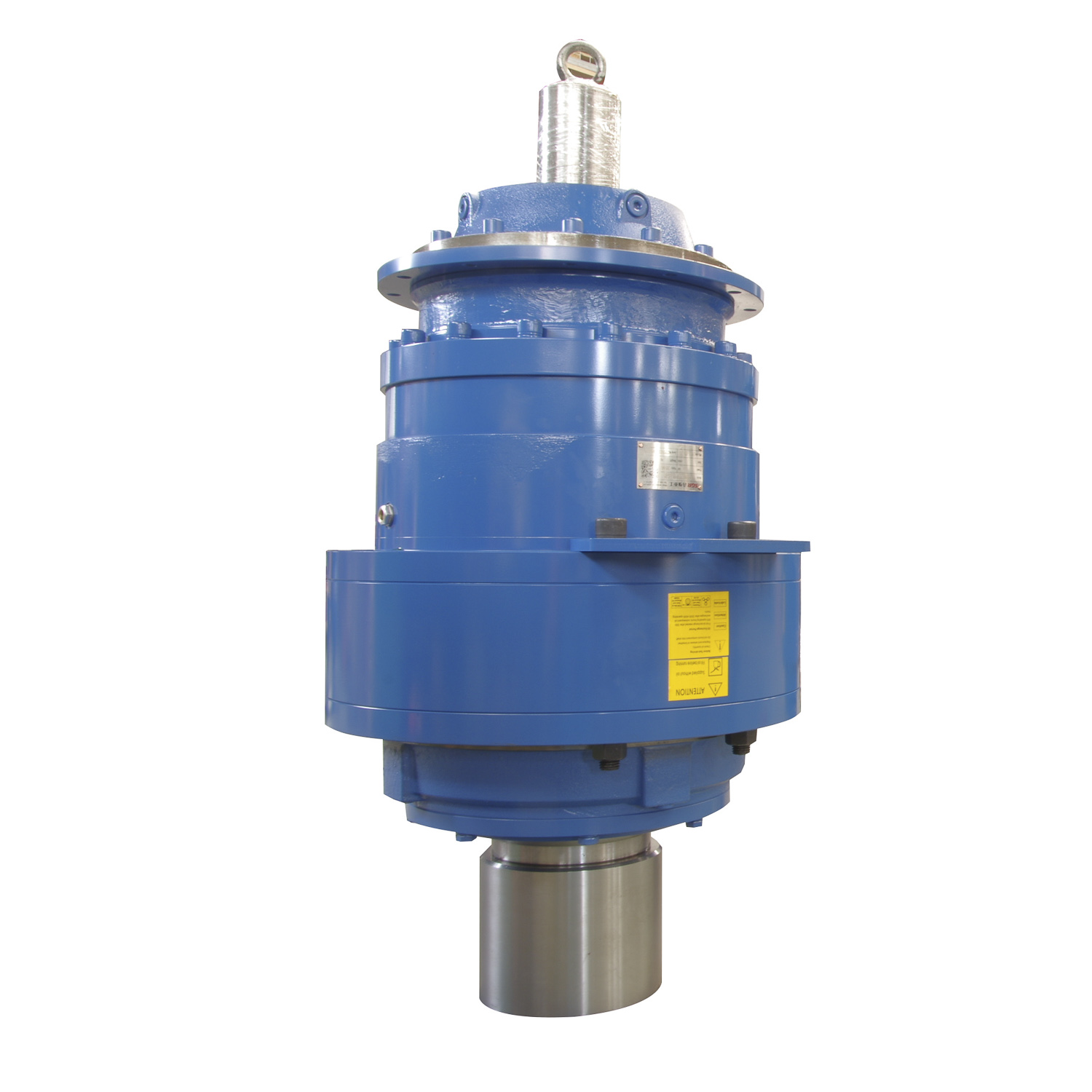 Custom Planetary Gear Reducer with High Torque Manufacturers, CompanyShanghai SGR Heavy Industry Machinery Co., Ltd is China Planetary Gear Reducer with High Torque Manufacturers, OEM/ODM Planetary Gear Red...View Product →
For this class of duty, the buyer should provide the service factor, the shock load history, and the extreme ambient temperature. A supplier that asks for these numbers before quoting is usually the supplier that will deliver a reducer capable of surviving the application.
Process equipment is where the widest variety of custom gearboxes appears, because the mechanical requirements change sharply from one production line to the next. The common thread is continuous operation that makes downtime expensive.
Mixers are among the most demanding drives in any plant. The load is continuous, the output speed is low, and torque rises sharply as the medium thickens or when solids are introduced. A double-enveloping worm gearbox designed for mixer applications is often preferred here because the enveloping tooth contact carries higher load without increasing the center distance, and the right-angle configuration suits tank-top mounting.
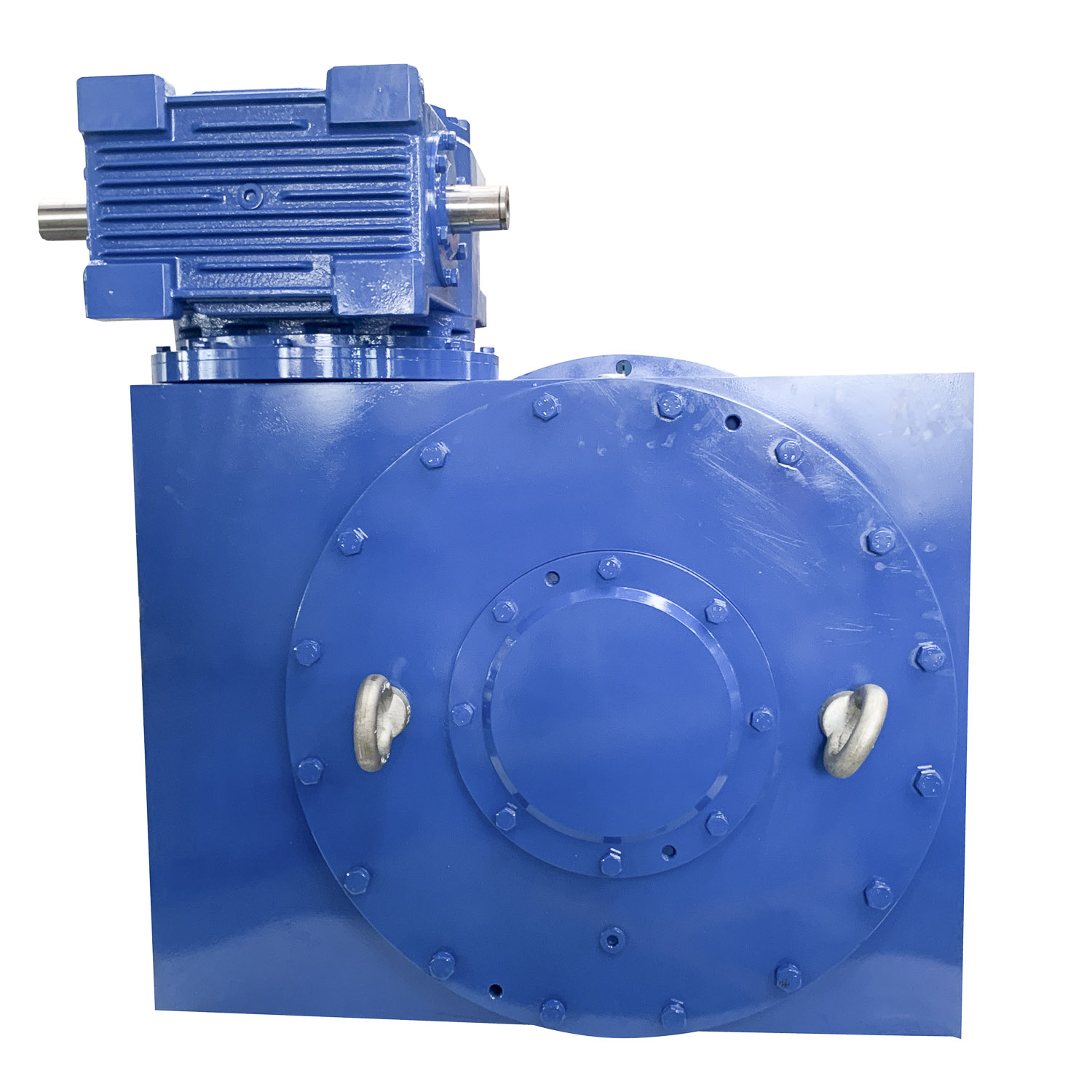 Custom Double Enveloping Worm Gearbox Appilcation For Mixer Manufacturers, CompaShanghai SGR Heavy Industry Machinery Co., Ltd is China Double Enveloping Worm Gearbox Appilcation For Mixer Manufacturers, OEM/ODM Doubl...View Product →
Food and beverage lines add washdown, cleaning chemicals, and noise limits to the torque requirement. These are usually met with right-angle or coaxial reducers in washdown-capable housings, output seals matched to the sanitary zone, and food-grade lubricants. The customization is modest in geometry but important in materials: stainless adapters, coated housings, and specialized seals that a standard catalog product does not offer.
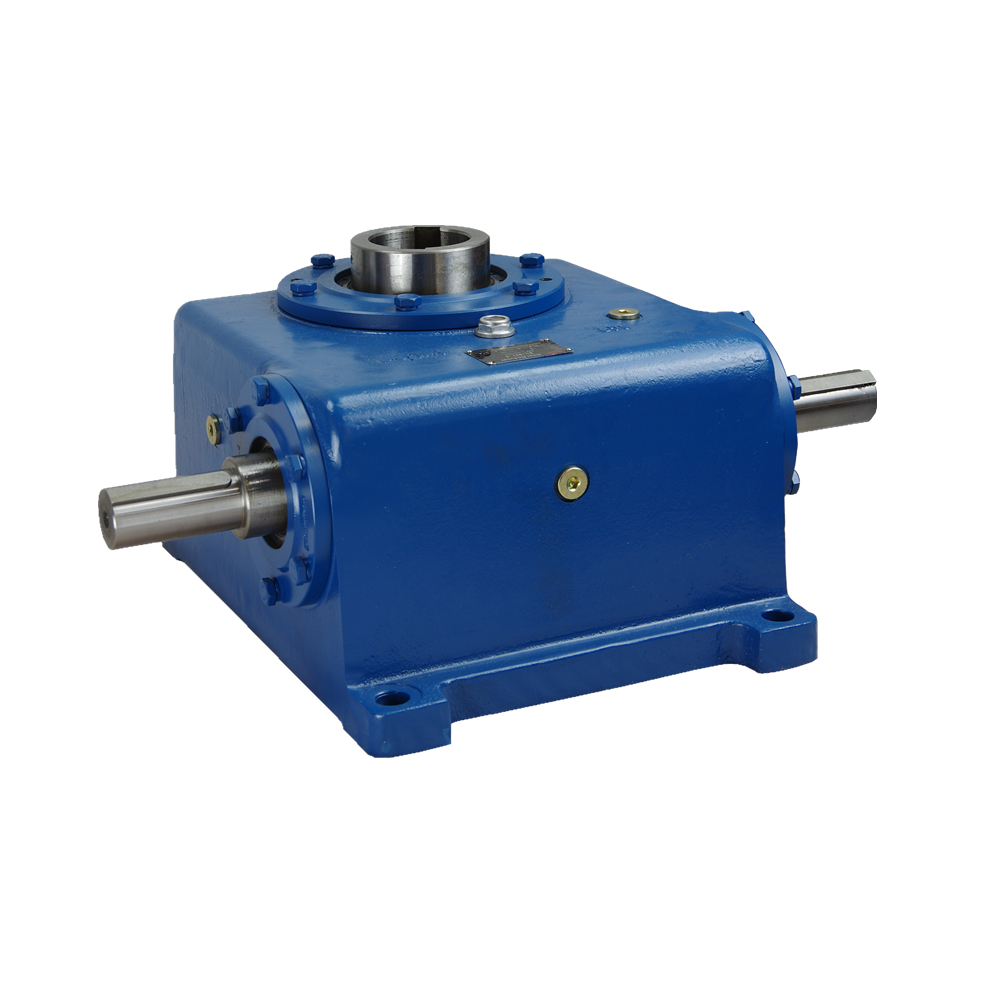
Pharmaceutical equipment sits at the precision end of the process range. A tablet press needs smooth, repeatable turret rotation, low vibration, and a drive that does not pulse at the dwell point. An annular worm gear reducer for tablet presses is tuned to that indexing requirement, with controlled backlash and a profile that matches the press cycle. General-purpose reducers rarely hold that level of consistency.
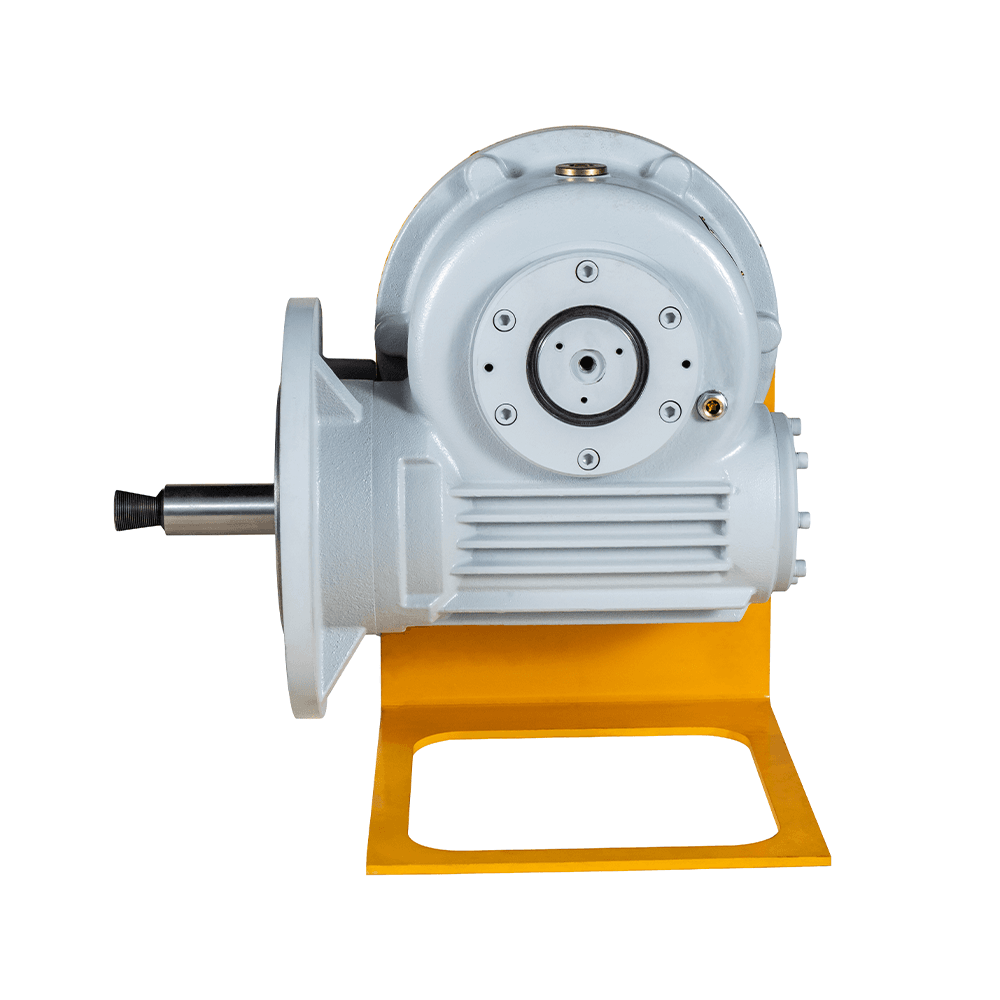 Custom TOP Annular Worm Gear Reducer For Tablet Presses Manufacturers, CompanyShanghai SGR Heavy Industry Machinery Co., Ltd is China TOP Annular Worm Gear Reducer For Tablet Presses Manufacturers, OEM/ODM TOP Annul...View Product →
Forklift attachments, hoists, cranes, and conveyor modules make up another steady source of custom gearboxes. The requirements are compactness, high ratio in a small envelope, resistance to vibration, and, for vertical loads, self-locking behavior. A single-stage cylindrical worm gear reducer is a frequent choice because it delivers a high ratio in one compact housing for functions such as fork tilt, side-shift, or rotating attachments.
The custom element in this sector is usually the mounting interface: a specific flange to the attachment frame, a particular output shaft diameter, and a ratio selected to give the attachment the right speed at a given motor speed. The changes look small, but they are exactly what keeps the rest of the machine simple and reliable.
Solar trackers and rotary positioning drives are among the fastest-growing users of custom planetary gearboxes. Here the requirement is not raw torque but precision of motion: low backlash, consistent ratio accuracy, and the ability to hold position against wind loads for years of outdoor service. When a solar array must track within a fraction of a degree, the gearbox is selected around stiffness and backlash rather than nominal torque alone.
The same principle applies to slewing drives for cranes and rotating platforms, where the custom gearbox integrates the motor, brake, and bearing into a single unit. The customization is driven by the positioning accuracy and the environmental rating, which is why specification data for these products looks different from a standard torque table.
The better the input data, the faster the design and the fewer the revisions. A manufacturer can usually move straight to quotation and design work when it receives the following information:
With that data, the conversation moves to design choices: gear geometry, housing material, sealing, lubrication, and final testing. A responsible supplier will also propose a verification plan, for example measuring power and efficiency on a test bench before shipment. For a custom gearbox, published efficiency is a starting point, not a guarantee.
Buyers should therefore judge a supplier on design, machining, and inspection capability rather than on the word "custom" alone. Reviewing documented certifications and inspection procedures is a practical first filter before sharing a drawing.
Custom gearboxes are used in every industry where a standard reducer's assumptions break down: mining, process equipment, material handling, renewable energy, and many others. The common denominator is not the industry label but the gap between catalog ratings and real operating conditions. A custom reducer pays for itself when it eliminates downtime, fits a tighter envelope, or improves machine precision.
The choice of partner matters as much as the choice of drawing. A gear manufacturer that designs, machines, and tests under one roof catches interface and quality problems before the unit ships, which is precisely the risk that matters most in custom transmission work.
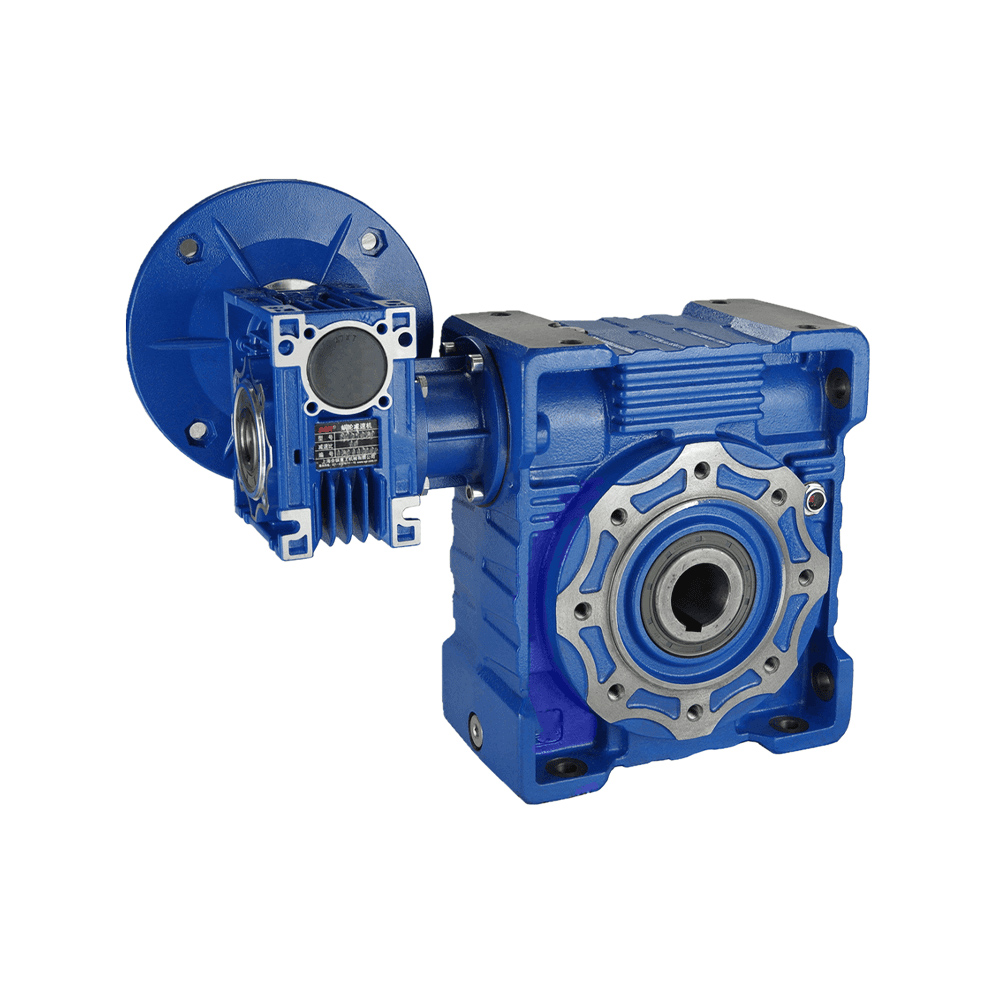
SGR develops and manufactures specialized worm gear reducers for logistics machinery attachments. T...
See Details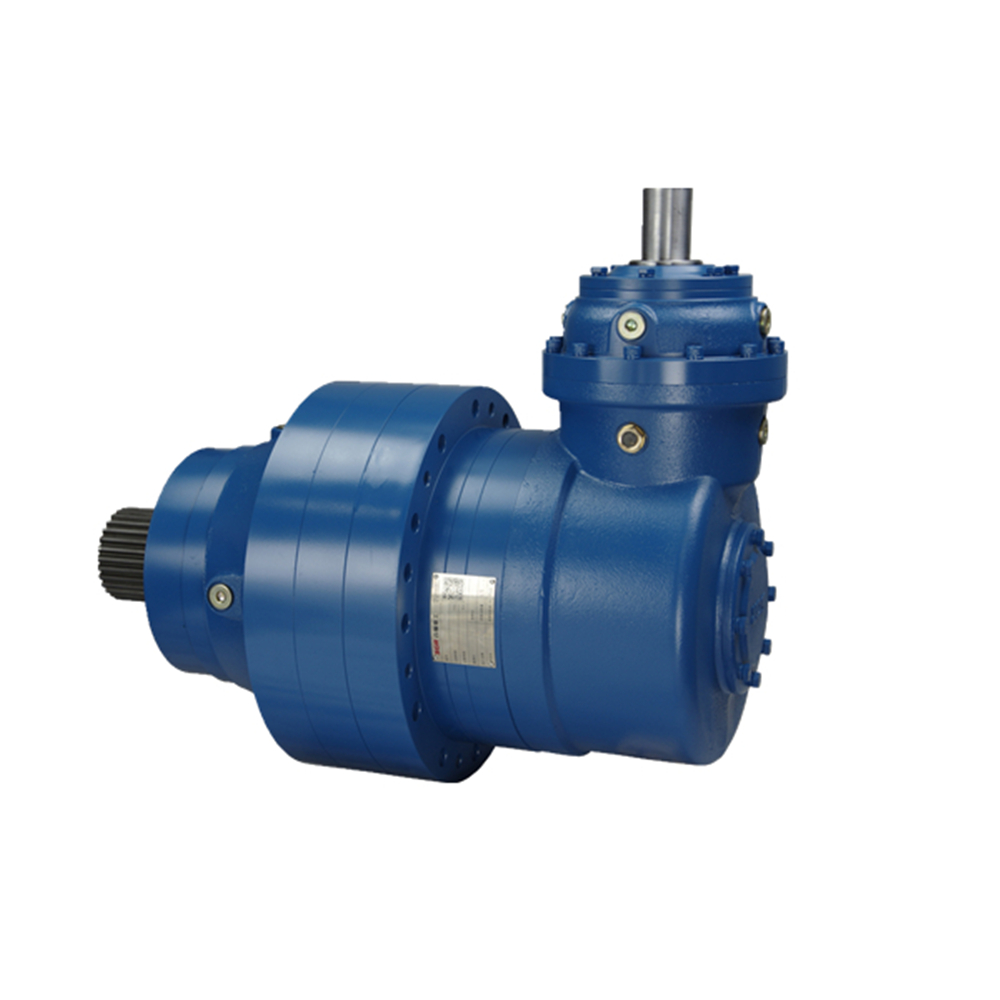
Technical data: 1. Ratio range: 3.15-30002. Input power: 0.25-55KW3. Permit torque rang: ≤ 200000N. ...
See Details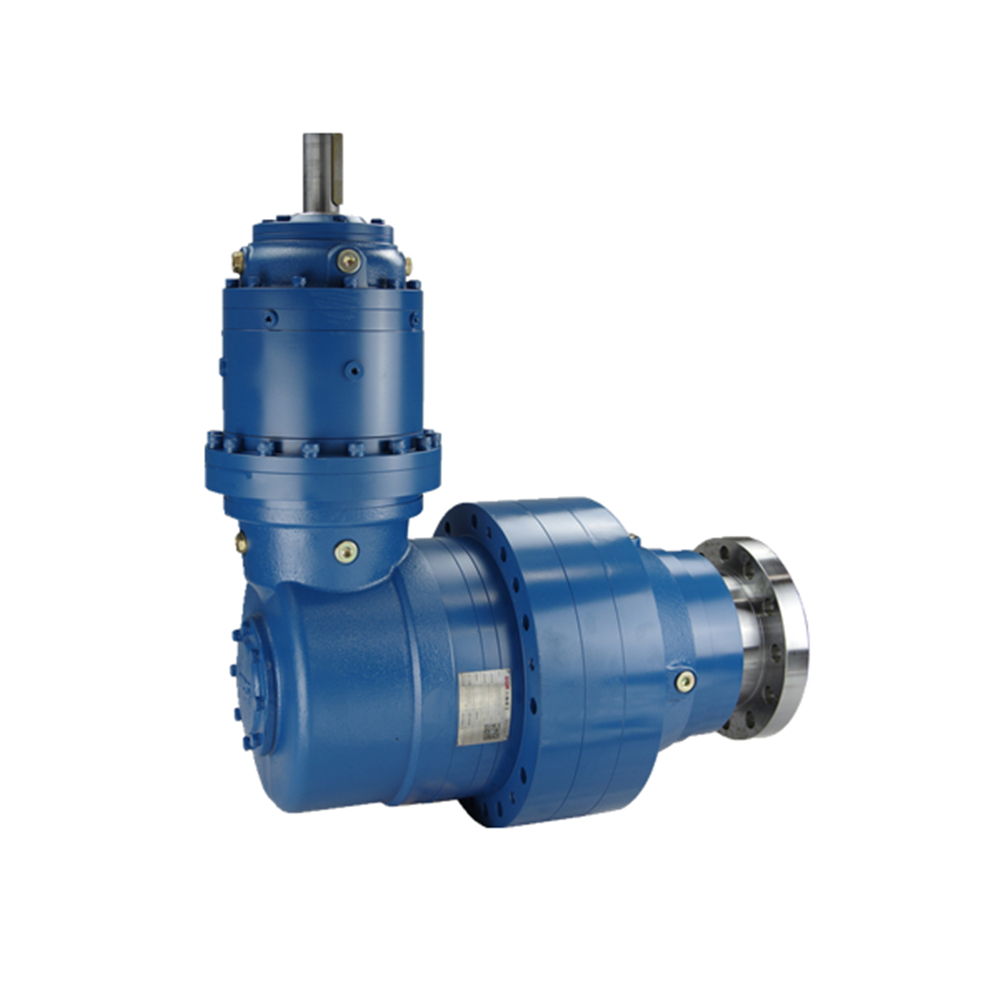
Technical data: 1. Ratio range: 3.15-30002. Input power: 0.25-55KW3. Permit torque rang: ≤ 200000N. ...
See Details
SGR is an ISO 9001 certified, DNV-accredited industry gearbox manufacturer since 1996. We supply different gear reducers to brands worldwide.