Global
 English
 中文简体
 русский
 Español
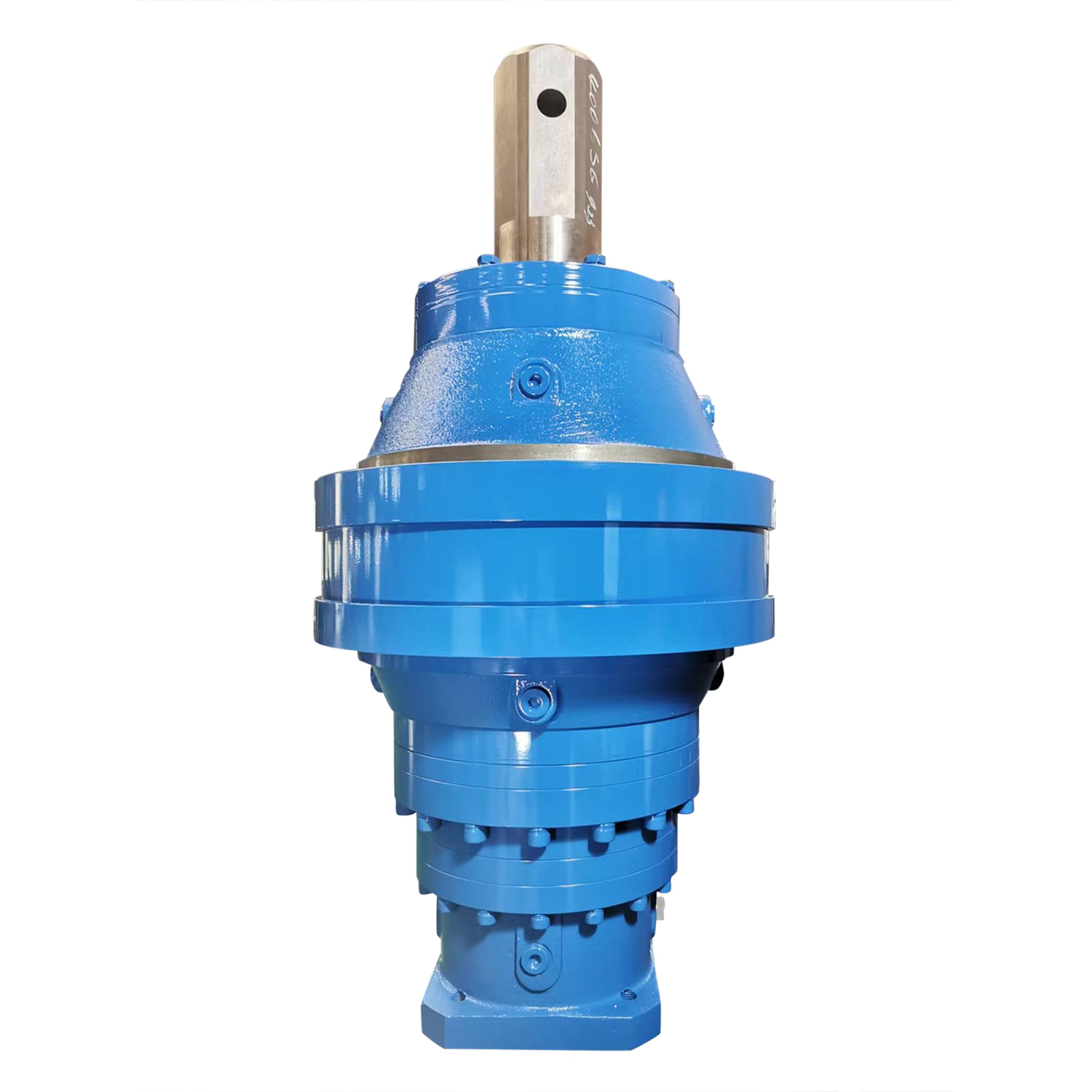
Planetary Gearbox Application For In Electric Drive Model: 200-885Ratio: 3.15-7800Output Torque :15...
See Details
News Directory
A planetary gearbox rated for 20,000 hours at nominal torque can come out of a foundry conveyor at 6,000 hours with nothing defective inside it. The unit ran at 130% of rated torque, in an 85 C sump, on the oil it was commissioned with. Planetary gearbox service life is not a fixed property of the hardware. It is the product of four multiplying factors: design margin, load spectrum, lubrication state and installation quality. Take any one of them below specification and the other three stop deciding the outcome.
A planetary gearbox service life rating is a statistical statement about a population, not a warranty date for one unit: an L10 life of 20,000 hours means 90% of identical units are expected to survive that long under a single defined load, speed and lubrication condition.
That figure comes from three separate calculations, and the smallest result governs the design:
In a planetary stage the planet bearings usually set the ceiling. They sit inside the carrier, run at high relative speed, and carry combined radial and tangential load that cannot be reduced without changing the carrier geometry.
Service life is the accumulated operating hours before a defined failure criterion is met: pitting across 5% of a gear flank area, bearing spalling, or backlash growth beyond the drawing tolerance.
This is why two units with the same nameplate torque can differ by a factor of three in the field. The nameplate states a capacity; service life states how that capacity is spent. Field life is a range rather than a single figure, and the practical notes on how long a customised gearbox lasts are worth reading before comparing two life claims.
Six variables explain most of the spread between a 6,000-hour planetary gearbox and a 40,000-hour one: load spectrum, lubricant film, contamination level, sump temperature, shaft alignment, and gear material with its heat treatment.
| Factor | Practical limit or target | What happens past the limit |
|---|---|---|
| Load spectrum | Peak torque inside the selected service factor, typically 1.75 | Bearing life falls with the 10/3 power of load; 15% over-torque removes about a third of L10 |
| Lubricant film | Synthetic ISO VG 220 with a film parameter above 1.0 at operating temperature | Boundary contact, scuffing and early pitting on the flanks |
| Cleanliness | ISO 4406 18/16/13 or cleaner with 10 micron absolute filtration | Abrasive wear and accelerated surface fatigue on bearings and flanks |
| Sump temperature | 60 to 75 C continuous, 90 C alarm | Oxidation rate doubles roughly every 10 K and the film thins as viscosity drops |
| Shaft alignment | Radial offset at or below 0.05 mm | Cyclic bearing loading, seal leakage and rising vibration |
| Gear material | Case depth 0.6 to 1.0 mm, 58 to 62 HRC surface, 30 to 42 HRC core | Sub-surface fatigue and flank spalling well before the calculated life |
Sustained overload is the largest controllable cause of short service life, because bearing life varies with the 10/3 power of load: a 15% torque increase cuts L10 life to about 63% of nominal.
Sizing on average load is the most common mistake. A mixer, crusher or extruder rarely runs at steady torque. The correct input is the equivalent load, Peq = ((n1 t1 P1^p + n2 t2 P2^p) / (n1 t1 + n2 t2))^(1/p), with p equal to 10/3 for roller bearings and 3 for ball bearings.
Illustrative re-rating: a three-stage planetary drive that calculates 22,000 h L10 at nominal torque falls to roughly 13,000 h once a 2.5x shock lasting 5 seconds every 20 minutes is entered into the equivalent load equation. The hours are not lost to a defect; they are lost to the load spectrum.
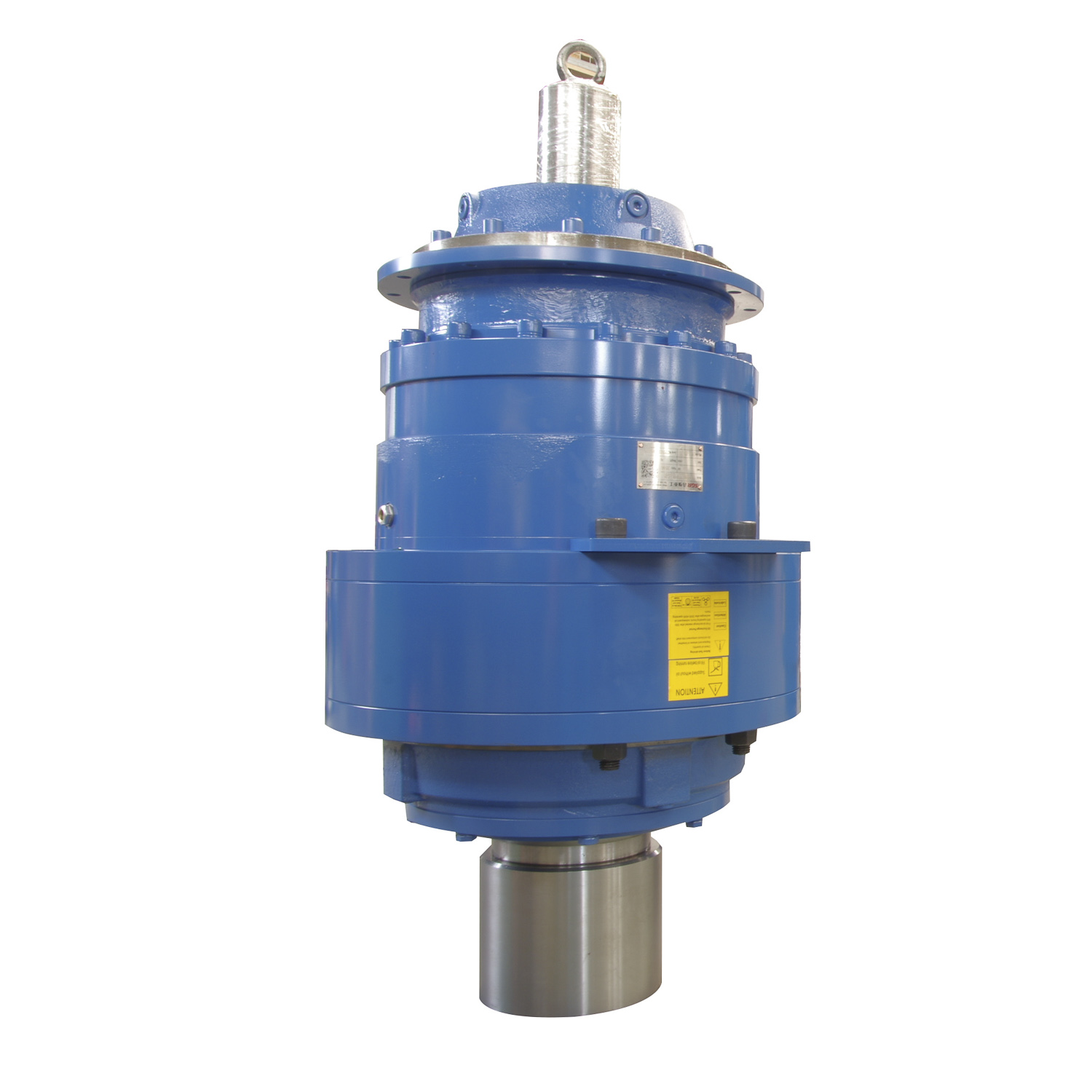 SGR N Series High Torque Planetary GearboxHigh-torque planetary reducer for heavy-duty machinery, with multiple stages, shaft options, and custom engineering for demanding load conditions.View Product →
A planetary unit that holds its oil between 60 C and 75 C and stays at ISO 4406 18/16/13 or cleaner will normally reach its calculated L10 life; one that runs at 90 C or at contamination class 21/19/16 typically will not.
Mineral oil oxidation roughly doubles for every 10 K above 70 C, and bearing life is commonly estimated to halve for every 15 K above it. Synthetic ISO VG 220 covers most industrial duty up to an 80 C sump; VG 320 becomes the usual choice when ambient exceeds 40 C or the drive runs continuously.
Every 10 K above 70 C roughly halves lubricant oxidation life. Every 15 K above 70 C roughly halves bearing life.
Case-hardened 20MnCr5 or 18CrNiMo7-6 with 0.6 to 1.0 mm effective case depth, 58 to 62 HRC at the surface and 30 to 42 HRC at the core is the baseline for planet gears in continuous industrial duty.
Case depth is not a cosmetic figure. The peak shear stress in a case-hardened tooth sits below the surface, so too thin a case places that peak into soft material and produces spalling well before the calculated life. Gears are ground after carburizing to ISO 1328 grade 6 or better, and shot peening is used to lift the bending fatigue limit on heavily loaded stages.
Geometry decides how evenly the load is shared. Three planets with a floating sun share load more evenly than four fixed planets, but four planets reduce the load carried per tooth. Helical planetary gearing runs quieter than spur gearing and adds an axial force that thrust bearings have to absorb.
Shanghai SGR Heavy Industry Machinery Co., Ltd. (SGR), a Shanghai gear transmission manufacturer, builds planetary and toroidal worm units on that material baseline and verifies them with a gearbox power and efficiency test bench, a coordinate measuring machine and a toroidal worm and hob measuring instrument developed in house.
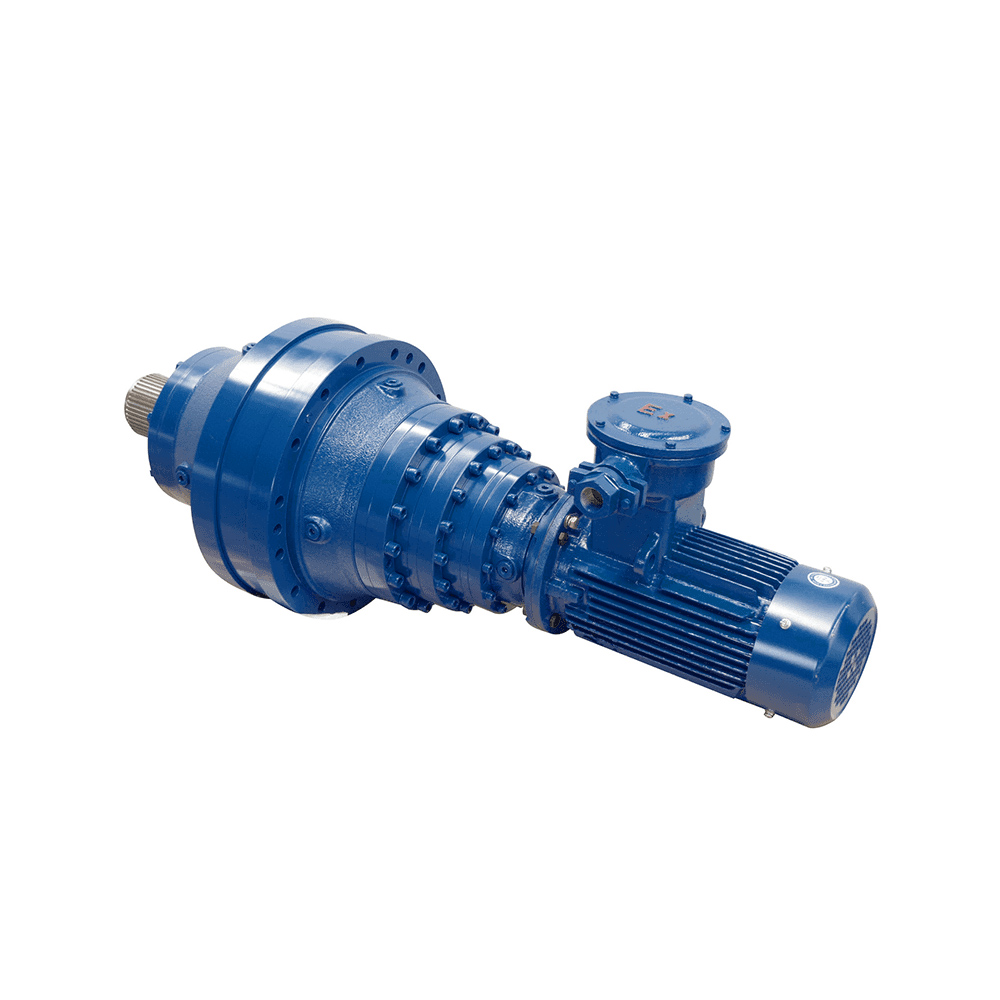 SGR N Series Coaxial Base-Mounted Planetary GearboxCoaxial planetary gearbox with high torque density, multiple shaft and mounting options, suited to industrial drives requiring aligned input and output shafts.View Product →
Radial shaft offset above 0.05 mm, a blocked breather or a leaking oil seal shortens service life faster than any upgrade in gear steel extends it.
Alignment is measured with a dial indicator at commissioning and again after the first 500 hours, once the foundation has settled. Oil level is checked with the unit stopped and the oil at ambient temperature, at the centre of the sight glass.
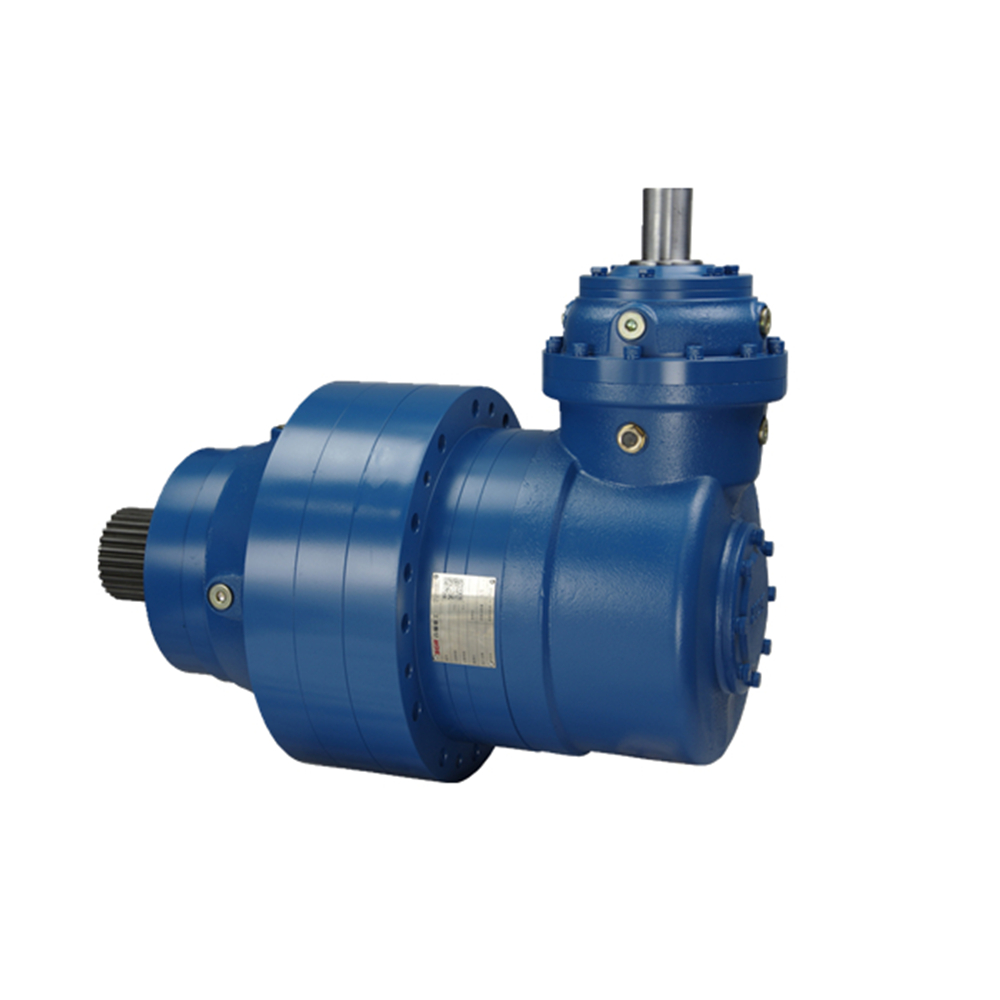 N Series Planetary Gearbox for Slewing Drive ApplicationsIndustrial planetary gearbox with broad ratio and torque range, multiple mounting and low-speed shaft options for efficient slewing drive use.View Product →
20,000 to 30,000 operating hours under nominal conditions is a normal design target for a stationary industrial unit. Continuous 24/7 duty in mining, steel or cement typically lands between 15,000 and 25,000 hours, and servo-driven units quoted at 20,000 hours see shorter life as reversal frequency and duty cycle rise.
More than any single component choice. Holding a synthetic ISO VG 220 at 70 C instead of 90 C roughly doubles the lubricant service interval, and moving from ISO 4406 21/19/16 to 18/16/13 removes the abrasive particles that drive surface fatigue. Sampling at 2,000 hour intervals is the cheapest predictive tool in the maintenance budget.
It buys margin, and the margin compounds. Because life scales with the 10/3 power of load capacity, selecting a service factor of 2.0 instead of 1.25 multiplies calculated L10 life by roughly four to five times. The cost is a larger frame, more oil and a higher purchase price.
Ask for the L10 inputs, not the headline hours. A comparable claim states the bearing standard (ISO 281), the gear rating standard (ISO 6336 or AGMA 2101-D04), the output torque and speed assumed, the lubricant viscosity and the sump temperature used. Without those five values, two life figures cannot be placed side by side.
Service life is decided at the selection desk and confirmed in the first 2,000 operating hours. Verify the load spectrum against the equivalent load, keep the oil clean and below 75 C, align the shafts to 0.05 mm, and trend vibration from the first week of operation. Those four actions do more for durability than any single component upgrade.
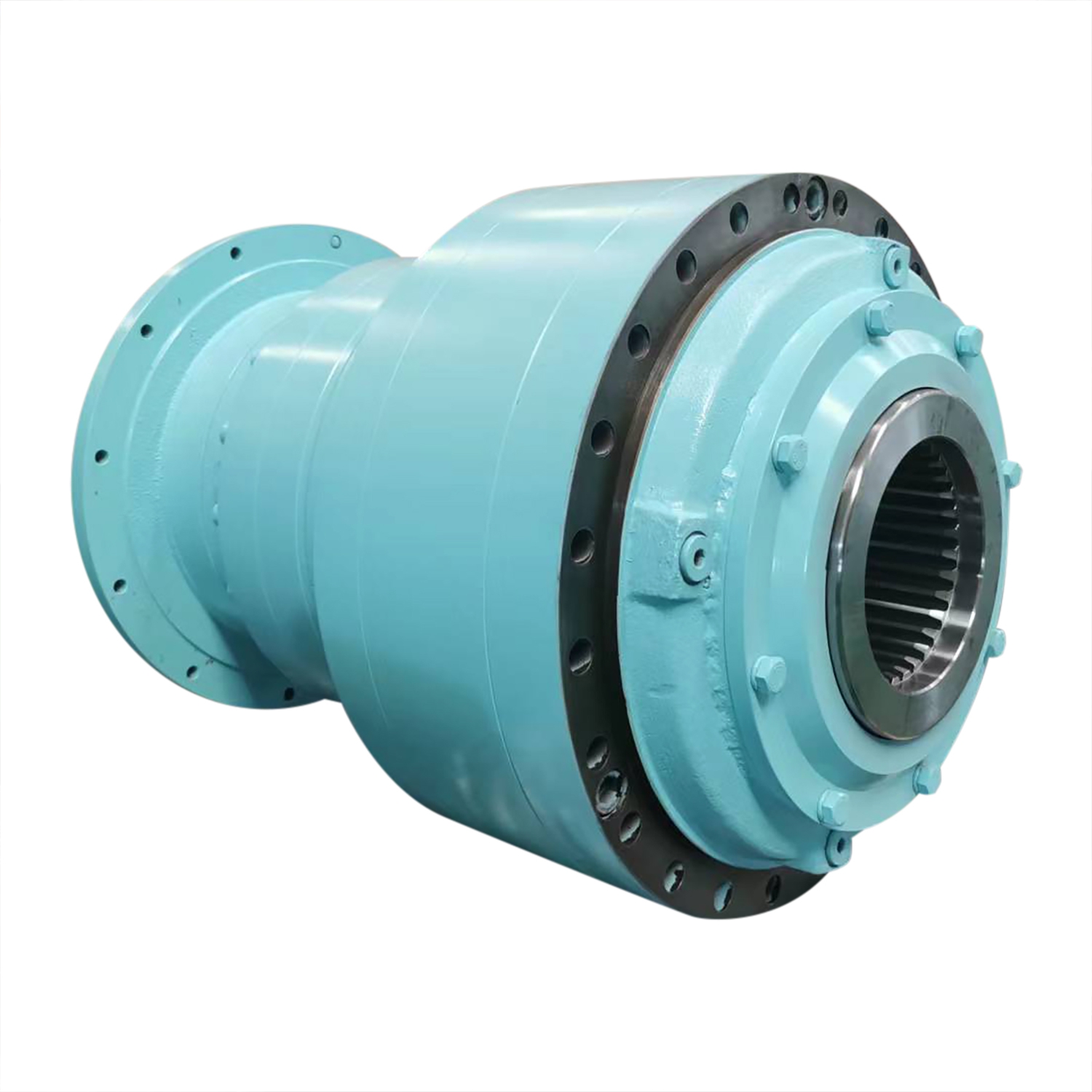
Planetary Gearbox Application For In Electric Drive Model: 200-885Ratio: 3.15-7800Output Torque :15...
See Details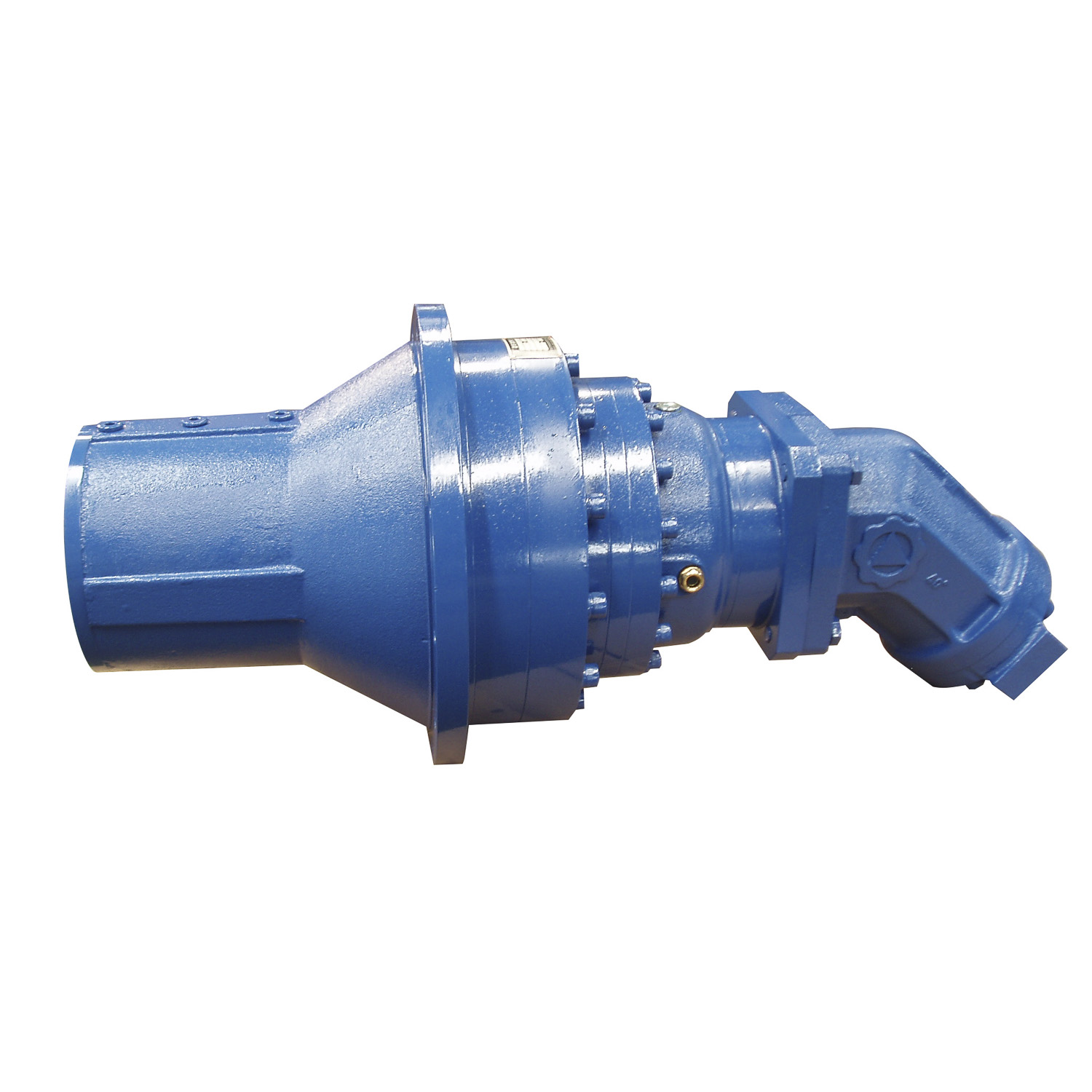
Key feature:Planetary gearbox is produced by modular design, and can be combined according to client...
See Details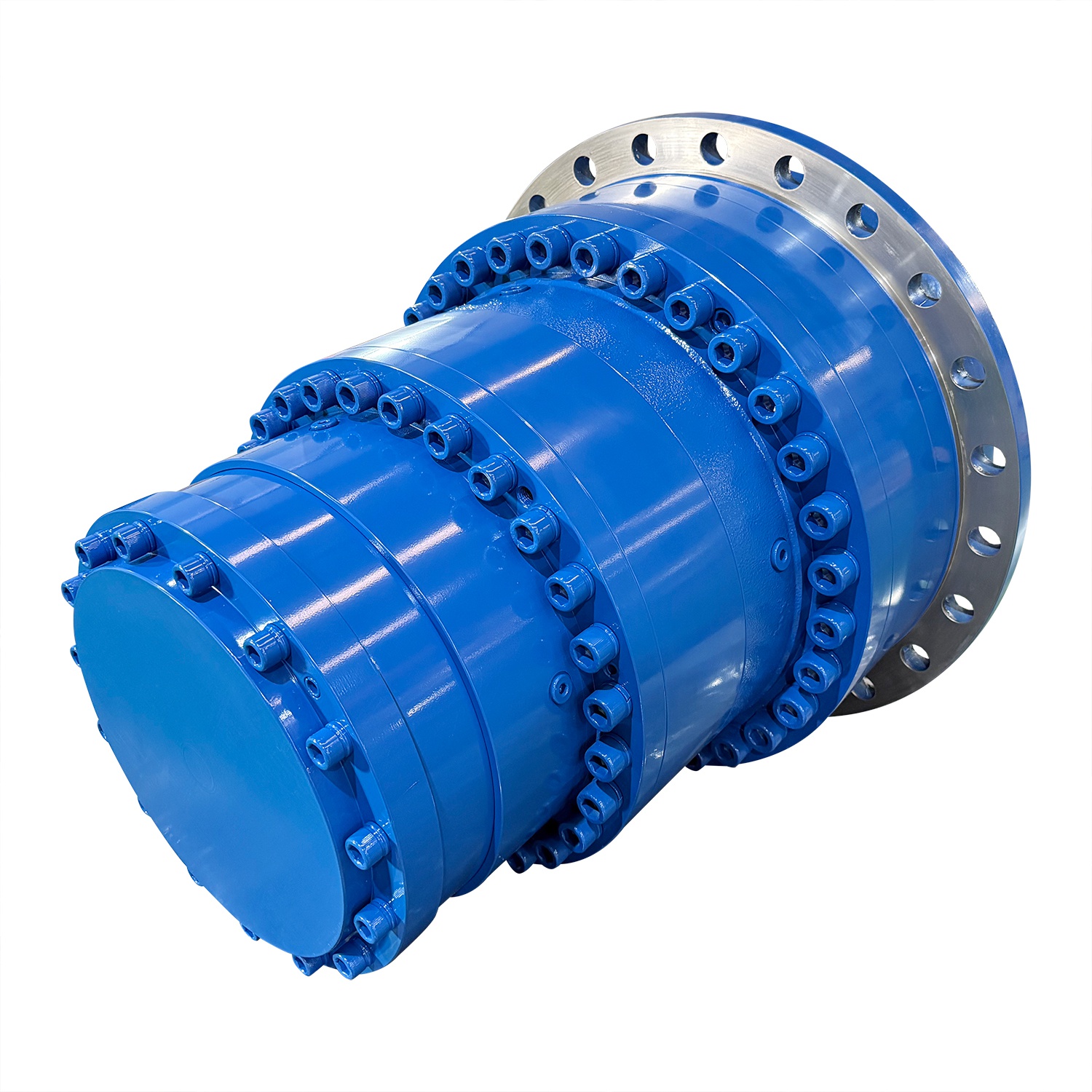
Planetary gear reducers serve as key transmission parts for sightseeing boats sailing along Russia’s...
See Details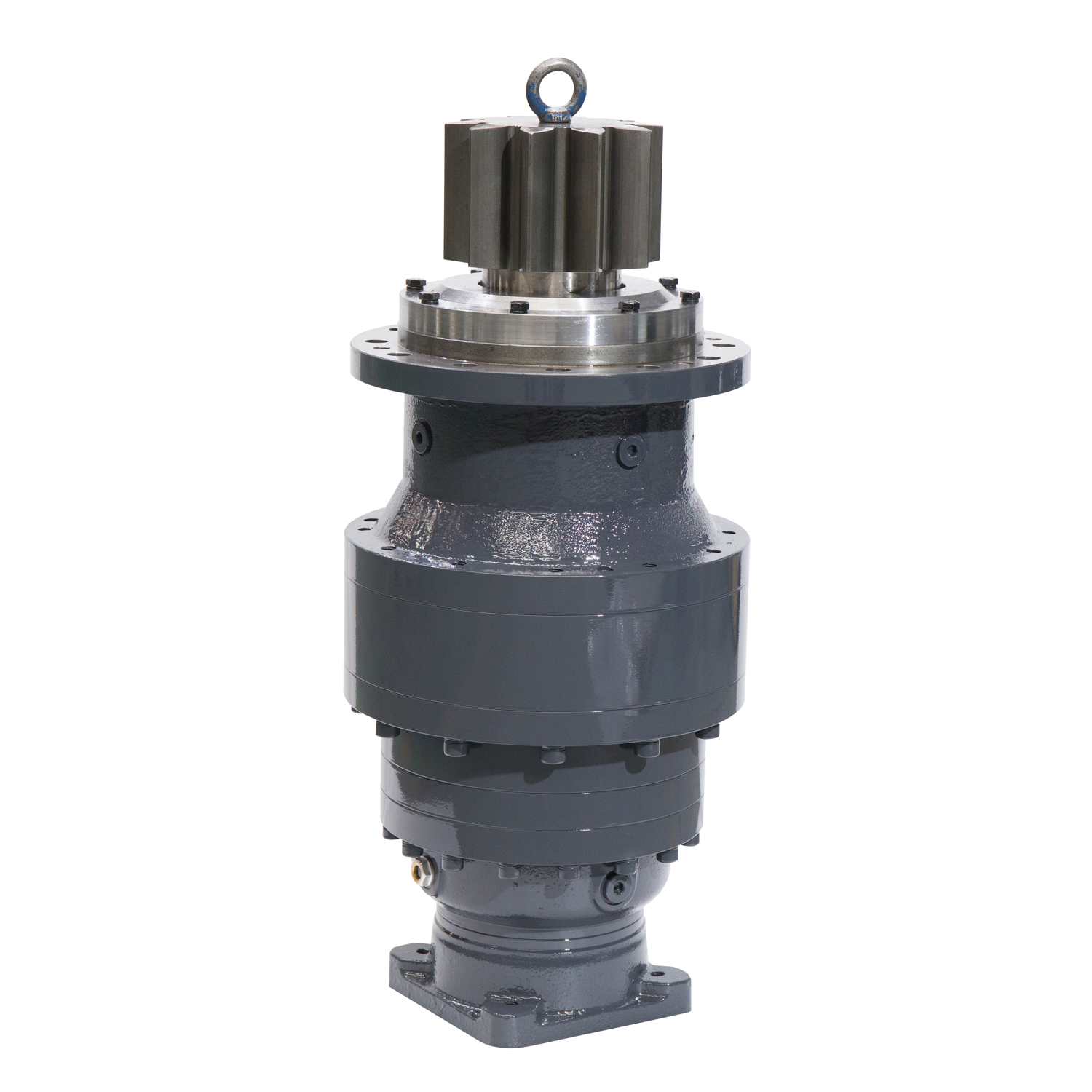
Model: 200-885Ratio: 3.15-7800Output Torque :1500Nm-540000NmRating Power :0.25KW-200kwDescription : ...
See Details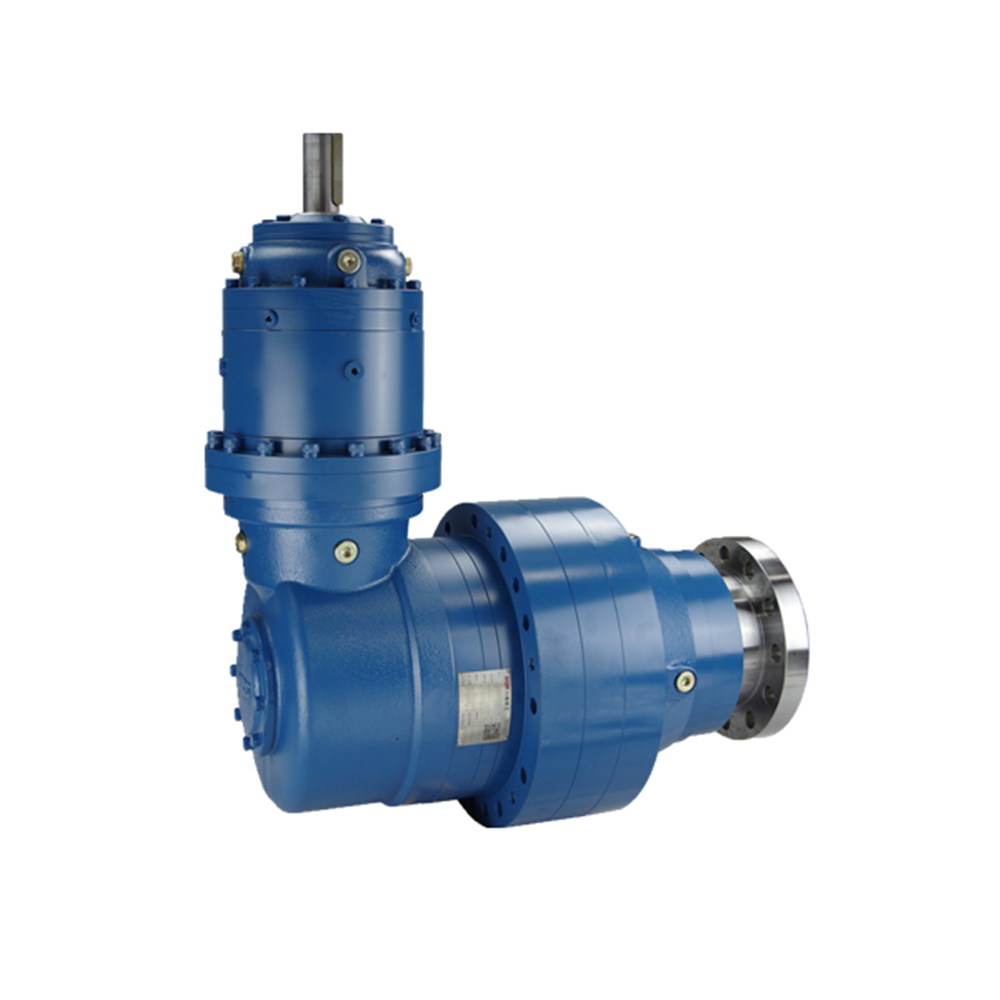
Technical data: 1. Ratio range: 3.15-30002. Input power: 0.25-55KW3. Permit torque rang: ≤ 200000N. ...
See Details
Technical data: 1. Ratio range: 3.15-30002. Input power: 0.25-55KW3. Permit torque rang: ≤ 200000N. ...
See Details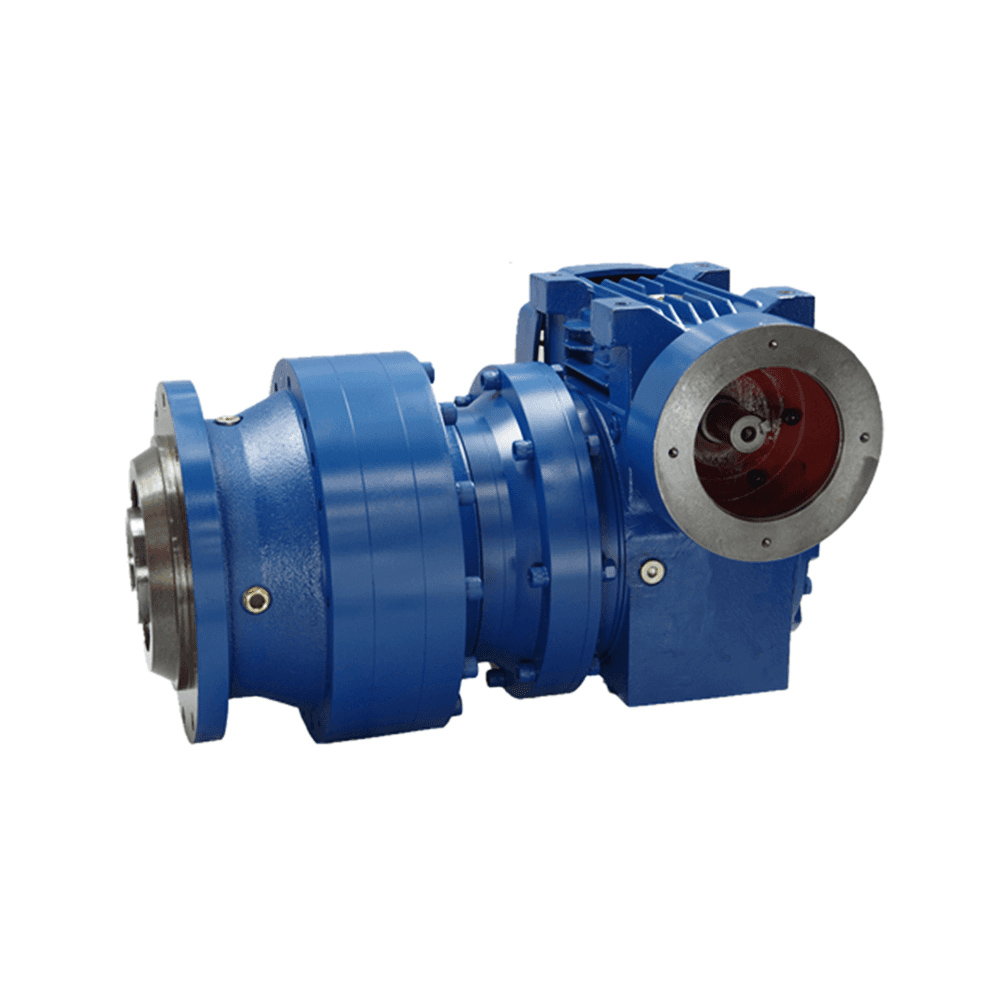
The planetary and toroidal worm combined reducer developed by SGR features a compact structure, with...
See Details
SGR is an ISO 9001 certified, DNV-accredited industry gearbox manufacturer since 1996. We supply different gear reducers to brands worldwide.