 Global
  English
 中文简体
中文简体 русский
 Español
SGR develops and manufactures specialized worm gear reducers for logistics machinery attachments. T...
See Details
News Directory
When purchasing a gearbox, many buyers compare products based on basic specifications such as rated torque, gear ratio, input speed, output speed, power, and mounting dimensions. However, it is not uncommon to find gearboxes with seemingly identical specifications but price differences of 10% to 20% or even more.
Why does this happen?
At first glance, two gearboxes may look almost identical. They may have the same gear ratio, similar dimensions, and comparable rated torque. But the real differences are often hidden inside the gearbox—in the materials, manufacturing processes, machining accuracy, quality control, service support, and sales channels.
For industrial equipment manufacturers, choosing a gearbox based solely on the lowest initial price can sometimes lead to higher maintenance costs, more frequent downtime, and a shorter service life.
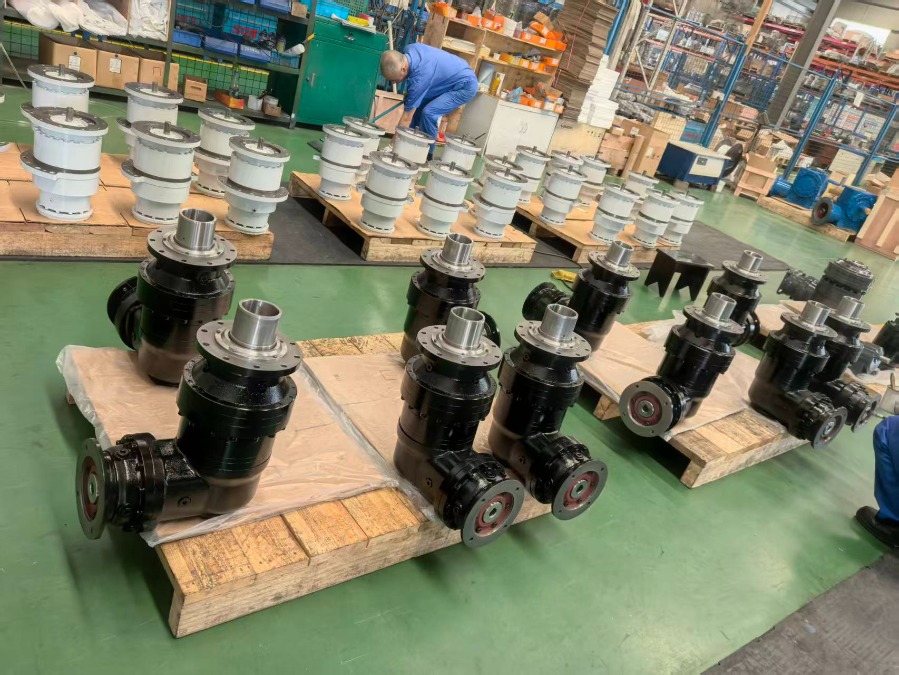
So, where does the price difference between similar gearboxes actually come from?
In this article, SGR analyzes the four major factors that influence gearbox pricing and explains what industrial buyers should look at when comparing gearbox suppliers.
The materials used for gears, shafts, bearings, housings, and other critical components have a direct impact on the performance and service life of a gearbox.
Two gearboxes may have the same external dimensions and nominal specifications, but if their internal materials are different, their actual load-bearing capacity, wear resistance, fatigue strength, and service life can be significantly different.
Industrial gearboxes often operate under high loads, repeated shock loads, or continuous-duty conditions. Therefore, gear material is one of the most important factors affecting gearbox reliability.
For heavy-duty planetary gearboxes, for example, high-strength alloy steels such as 20CrMnTi are commonly used for gears. With appropriate heat treatment and precision machining, these materials can provide high surface hardness, good wear resistance, and strong resistance to fatigue.
Lower-cost gearboxes may use less expensive materials or different material grades to reduce manufacturing costs. Although the gearbox may still meet basic dimensional requirements, its long-term performance under demanding operating conditions may be different.
The same principle applies to shafts, bearings, and gearbox housings.
A robust gearbox housing needs sufficient structural strength and rigidity to withstand operating loads and maintain proper gear alignment. Reducing material thickness or using lower-grade materials can lower the manufacturing cost, but may also affect mechanical strength, heat dissipation, and long-term reliability.
Therefore, when comparing two gearbox quotations, buyers should not only ask:“What are the specifications?”They should also ask:“What materials are used for the critical components?”
Material quality is only one part of the equation. Manufacturing technology and machining accuracy are another major source of gearbox price differences.
Gearboxes are precision mechanical products. Gear geometry, tooth surface quality, heat treatment, assembly accuracy, and bearing positioning all influence how smoothly the gearbox operates.
Gear heat treatment processes such as carburizing and quenching can significantly improve surface hardness, wear resistance, and fatigue performance.
For heavy-duty gears, carburizing and quenching can create a hard wear-resistant surface while maintaining a relatively tough core. This is particularly important for gearboxes that operate under high torque and repeated loading.
However, advanced heat treatment requires additional equipment, process control, testing, and quality inspection. These processes naturally increase manufacturing costs compared with simpler heat-treatment methods.
Gear manufacturing is not simply about cutting teeth into a steel blank.
Higher-end gearbox manufacturers may use precision gear grinding and other advanced machining processes to improve tooth accuracy and surface finish.
For example, SGR uses processes including carburizing, quenching, and precision grinding for its planetary gearbox gears. Precision machining helps improve gear meshing, load distribution, operating smoothness, and durability.
In addition, professional gearbox manufacturers invest heavily in inspection and testing equipment.
Typical equipment may include coordinate measuring machines (CMM),gear measuring systems,geometric accuracy measuring instruments,dimensional inspection equipment,gearbox performance test benches and other specialized quality-control equipment.
These machines are expensive to purchase and maintain, but they are important for controlling manufacturing consistency.
By contrast, a low-cost gearbox may rely on relatively basic machining and inspection processes. The product can still look similar from the outside, but differences may appear during long-term operation in the form of noise, vibration, gear wear, backlash, temperature rise, or premature failure.
This is why machining accuracy is one of the hidden factors behind gearbox pricing.
The price of a gearbox is not determined only by the physical product.
For industrial buyers, technical support and after-sales service can also represent significant value.
A gearbox is often an important component of the customer's complete machine. If the gearbox fails, the entire production line or machine may have to stop.
Therefore, the real cost of a gearbox should include not only the purchase price, but also the potential costs associated with installation,commissioning,troubleshooting,maintenance,spare parts,production downtime and technical support.
Established gearbox manufacturers usually have more experience in handling different applications and operating conditions.
For example, SGR provides technical support covering gearbox selection, application consultation, installation guidance, troubleshooting, spare parts, and after-sales service.
For OEMs and industrial equipment manufacturers, this support can be particularly important when a gearbox needs to be customized according to specific torque, speed, mounting, input, or output requirements.
A cheaper gearbox with limited technical support may initially save money, but if a problem occurs during installation or operation, the customer may need to spend additional time and resources solving the problem.
Therefore, buyers should compare not only gearbox price, but also the supplier's technical capabilities and service system.
Another important factor behind gearbox price differences is the sales channel.
A gearbox may pass through several levels of distributors, agents, and trading companies before reaching the final customer. Each level can add its own operating costs and profit margin.
As a result, the final price may be significantly higher than the manufacturer's original quotation.
By purchasing directly from a gearbox manufacturer, customers may reduce some of these intermediate costs.
Direct purchasing can also provide other advantages:
Customers can communicate directly with engineers or technical sales teams instead of passing technical information through multiple intermediaries.
This can make product selection and customization more efficient.
For customized gearboxes, direct communication with the manufacturer can help reduce misunderstandings regarding torque requirements,gear ratio,input configuration,output configuration,mounting dimensions,operating environment and duty cycle.
Manufacturers can benefit from their own production facilities, raw-material purchasing volumes, manufacturing capacity, and standardized production processes.
These advantages can help reduce production costs and provide more competitive prices to customers.
For industrial OEMs purchasing gearboxes in batches, the difference between buying directly from the manufacturer and purchasing through multiple distribution layers can become particularly noticeable.
When comparing gearbox quotations, it is tempting to choose the cheapest product that meets the basic specifications.
However, purchase price and total cost of ownership are not necessarily the same thing.
Suppose two planetary gearboxes have the same nominal torque and gear ratio. One costs less, while the other costs slightly more.
If the lower-priced gearbox requires more frequent maintenance, has a shorter service life, or causes unexpected downtime, its actual cost over several years may be considerably higher.
A more meaningful comparison should include:
Initial purchase cost + installation cost + maintenance cost + spare parts cost + downtime risk + expected service life
This is particularly important for applications such as mining equipment, lifting machinery, drilling equipment, agricultural machinery, conveyors, and other heavy-duty industrial machines.
In these applications, gearbox reliability can directly influence the productivity of the entire machine.
Instead of comparing quotations based only on price, industrial buyers can evaluate gearbox suppliers from several dimensions.
Ask about the materials used for gears, shafts, bearings, and housings.
Check whether the manufacturer uses appropriate heat treatment and precision machining processes for the intended application.
Find out whether the manufacturer has professional inspection and testing equipment.
A gearbox designed for continuous heavy-duty operation may have different requirements from one used in light-duty machinery.
For OEM projects, check whether the supplier can customize the gearbox according to torque, ratio, mounting, input, output, and environmental requirements.
Consider whether the supplier can provide technical support, spare parts, troubleshooting, and service after delivery.
Finally, determine whether you are buying directly from the manufacturer or through multiple distribution levels.
As a gearbox manufacturer, SGR focuses on industrial transmission solutions including planetary gearboxes and worm gearboxes.
SGR's planetary gearboxes use high-strength materials and manufacturing processes designed for demanding industrial applications. Depending on the product series and application requirements, solutions can be configured with different stages, transmission ratios, input and output arrangements, and mounting options.
For heavy-duty applications, SGR focuses on factors such as torque capacity, load distribution, gear durability, machining accuracy, and long-term operating reliability.
SGR also supports OEM and customized gearbox projects, allowing customers to select a transmission solution according to their actual machine requirements rather than simply choosing a standard model based on dimensions.
This is particularly relevant for customers in industries such as mining, metallurgy,drilling,lifting equipment,construction machinery ,agricultural and livestock machinery,conveyors,wind power,textile machinery and marine auxiliary equipment.(Author,SGR, Angie Zhang)
WhatsApp: +86 188 1807 0282
SGR develops and manufactures specialized worm gear reducers for logistics machinery attachments. T...
See Details
Center distance: 100~710 mm Speed ratio: i ≥ 10. Design modularization, specification serialization,...
See Details
Center distance: 100~710 mm Speed ratio: i ≥ 10. Design modularization, specification serialization,...
See Details
As one of famous double enveloping worm gear manufacturers,SGR's double throated worm gear has adva...
See Details
In term of difference of double enveloping worm gear design and traditional worm gear design , do...
See Details
Product Description 1, High torque double enveloping worm gear adjust toughest working condition .2,...
See Details
SGR's C Series double enveloping worm gear reducerModel: 100 - 500Ratio: 10 -63Output Torque : 683...
See Details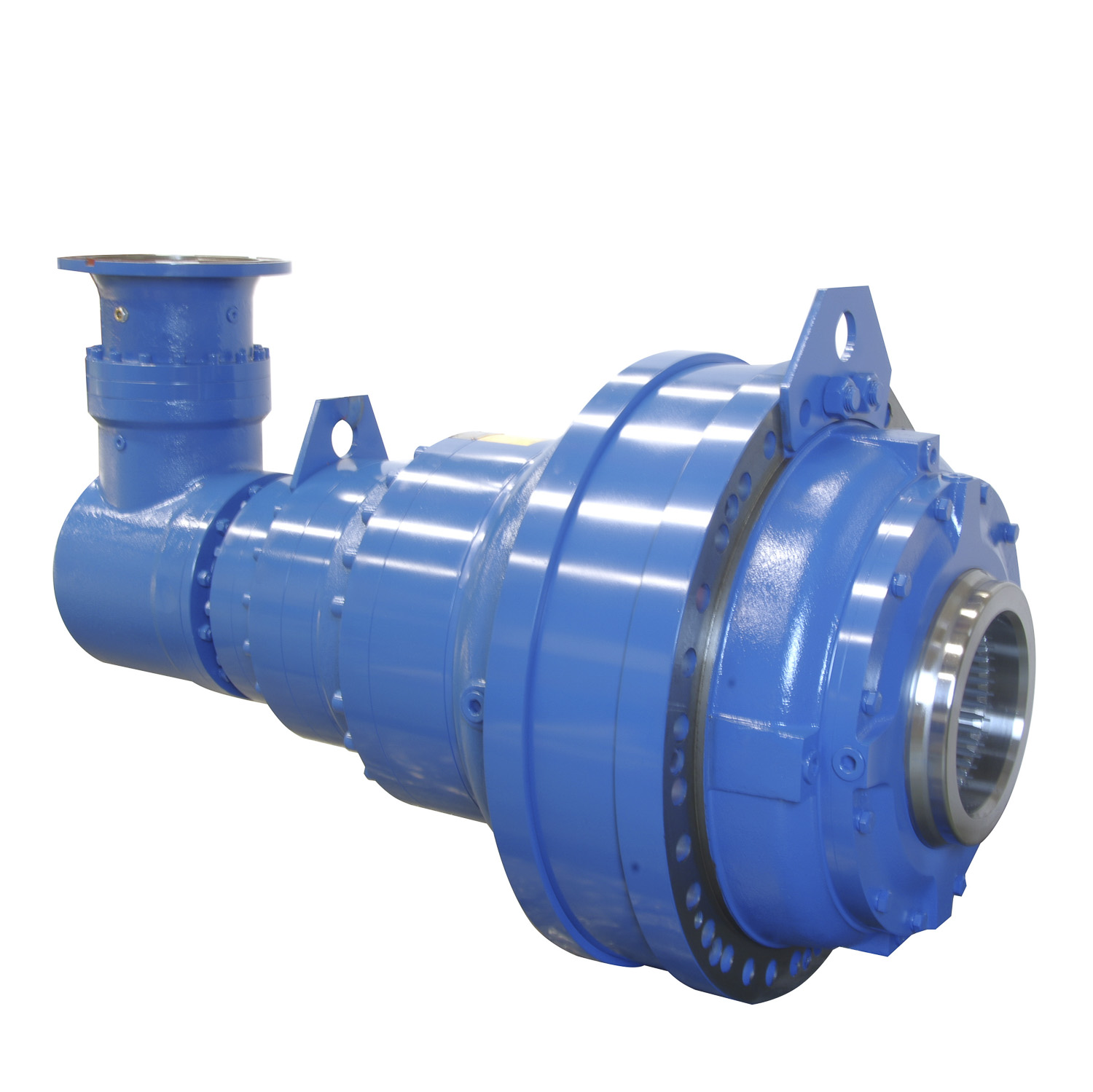
Planetary gearbox is produced by modular design, and can be combined according to client's request H...
See Details
SGR is an ISO 9001 certified, DNV-accredited industry gearbox manufacturer since 1996. We supply different gear reducers to brands worldwide.

